Seashells (Bivalves)
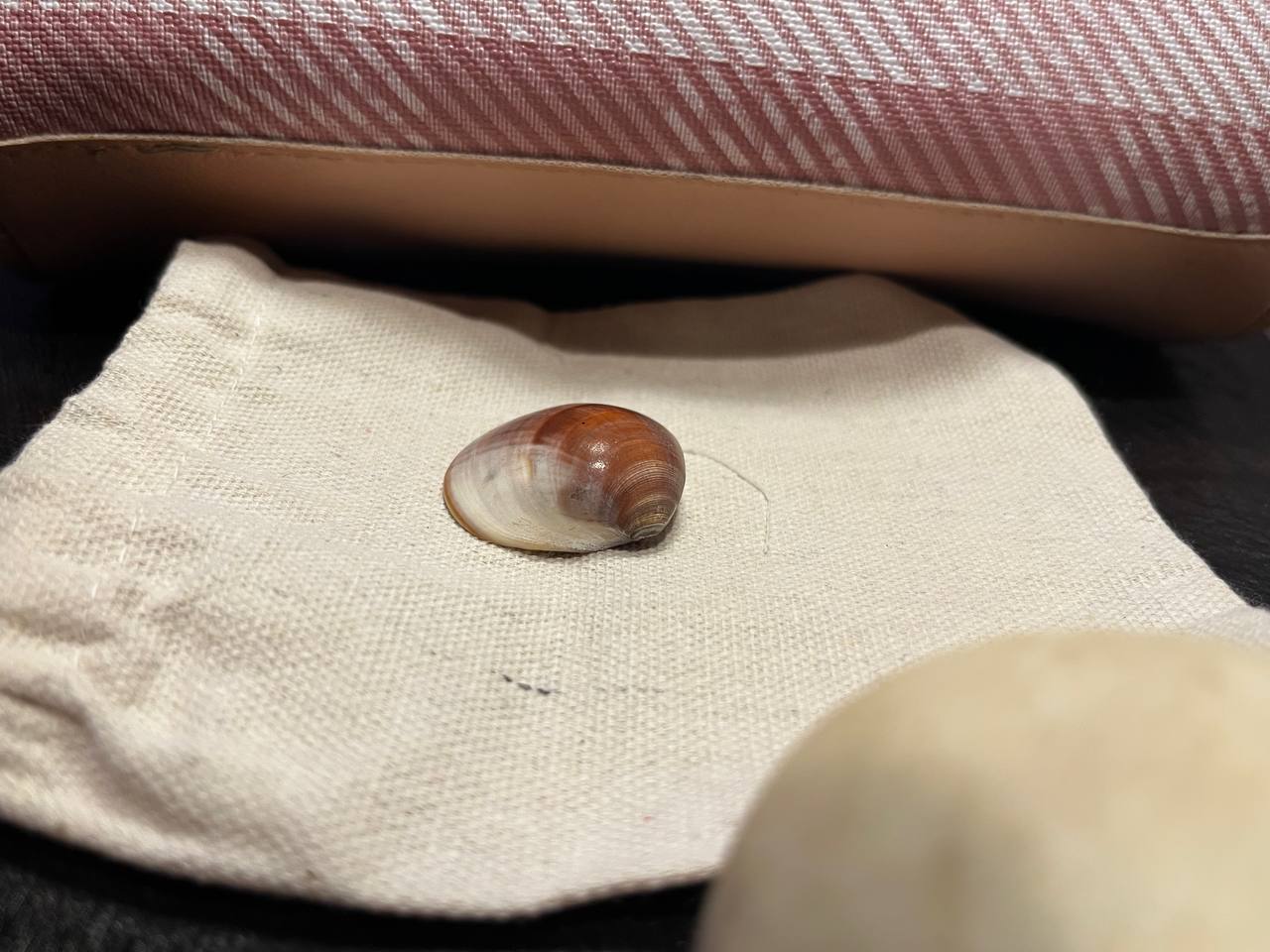
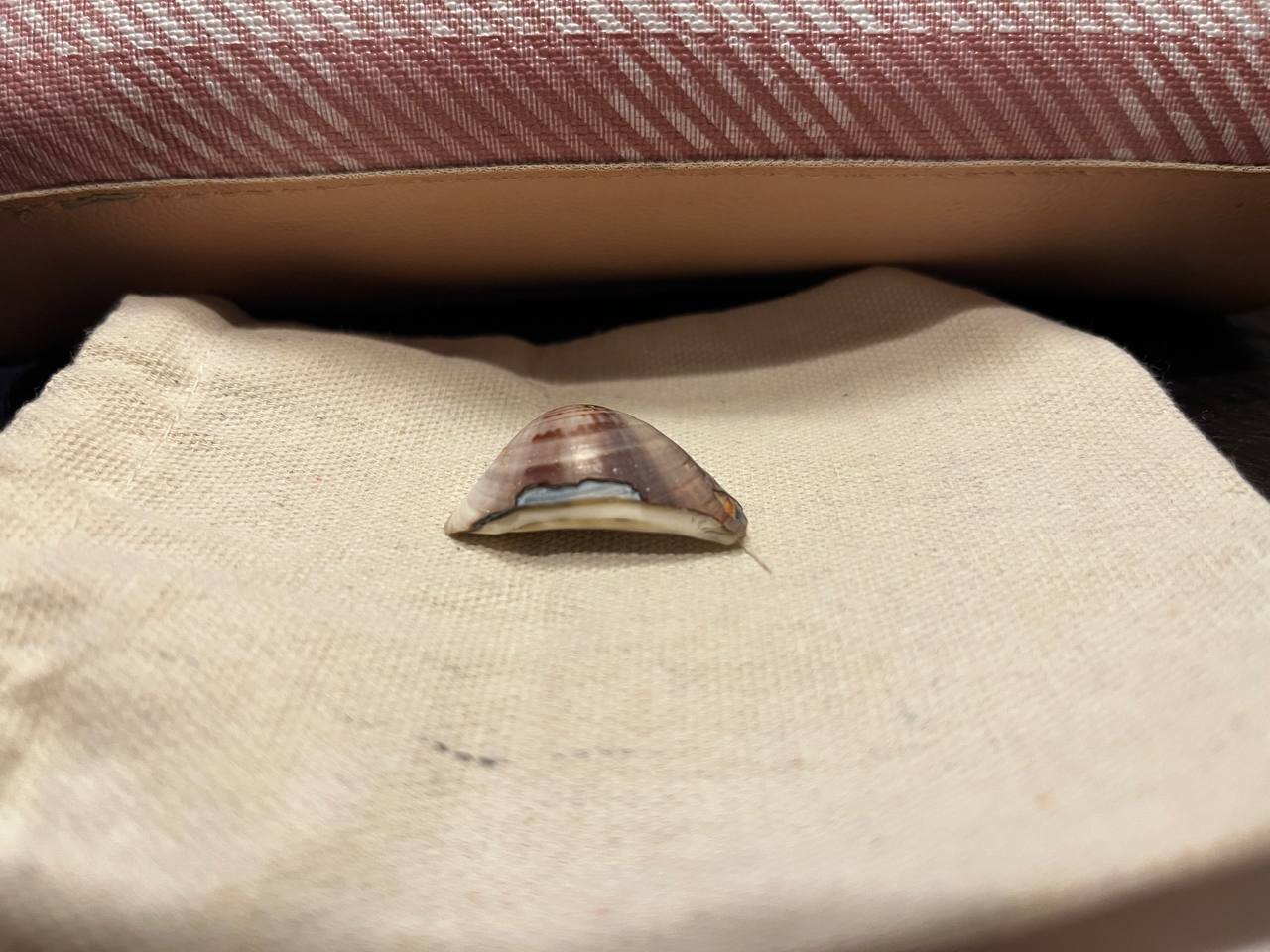
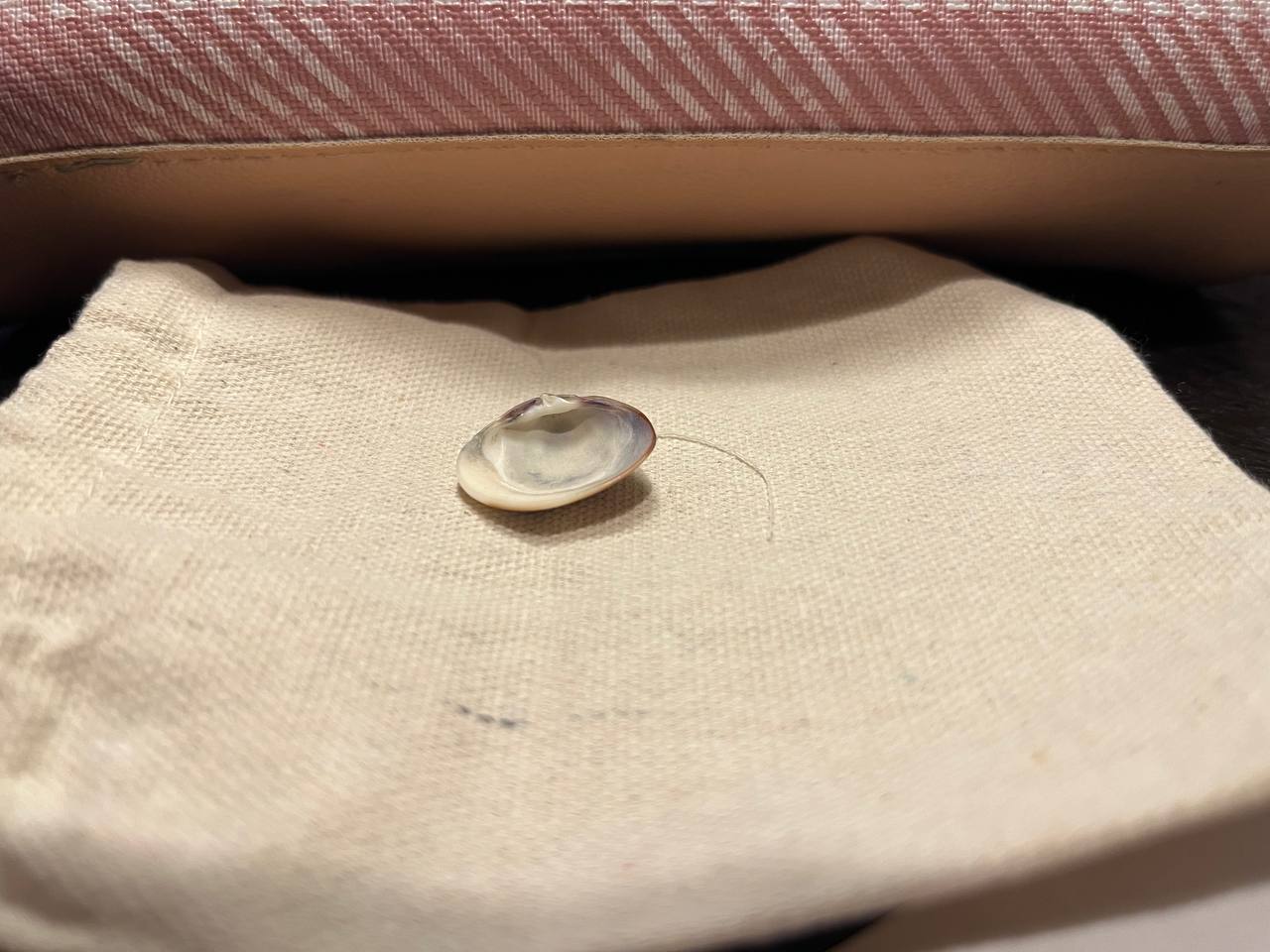
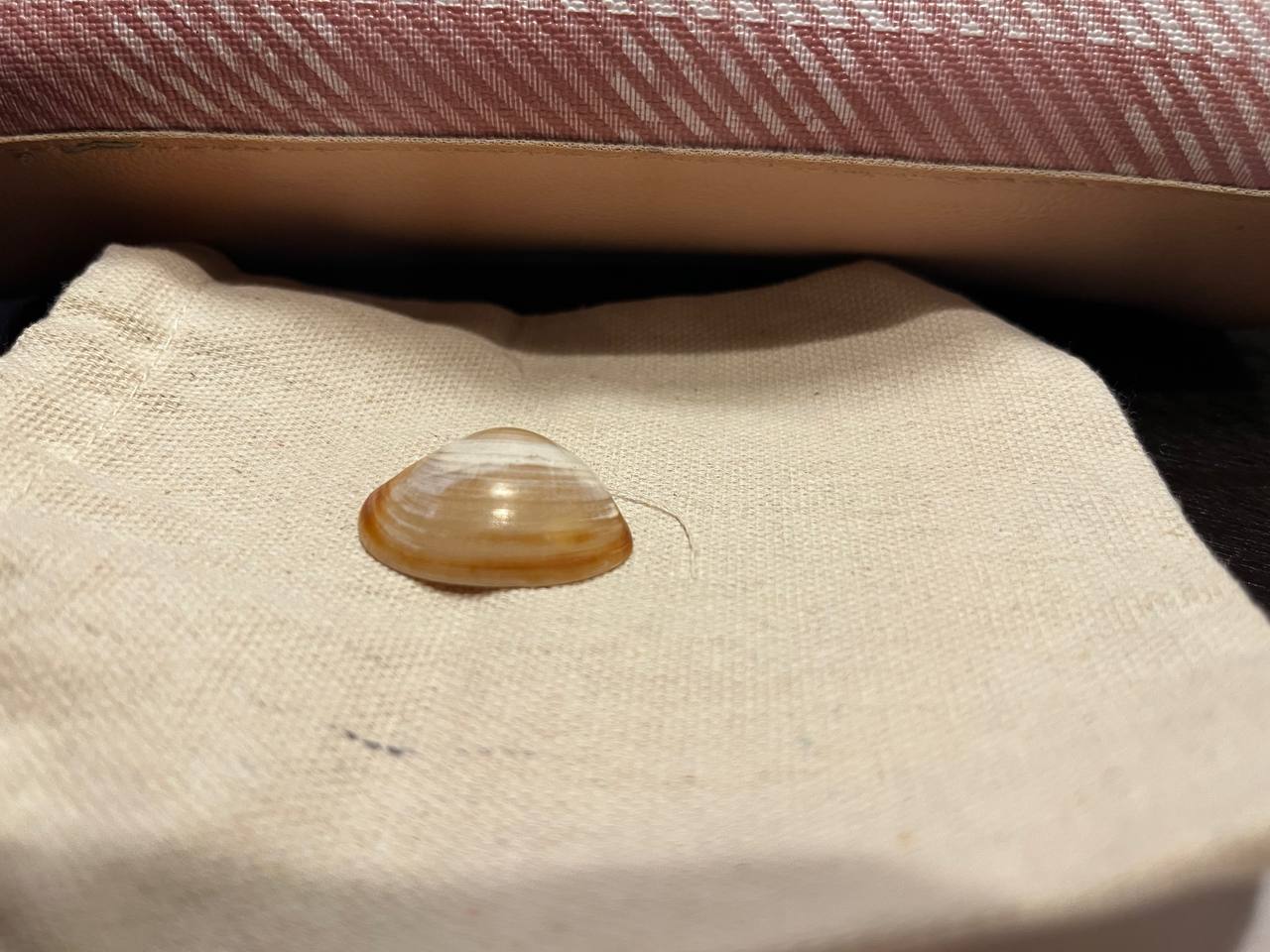
These are bivalve mollusc shells — the two-part shells of clam-like animals. Several of the photos are the same shell shown from outside (convex, glossy, colour-banded) and from inside (concave, pale, pearly).
Are they all the same type?
Mostly, yes — with at least one exception. The smooth, glossy, concentrically-banded wedge/oval shells are one kind: small surf-zone clams in the wedge-clam / tellin group (families Donacidae / Tellinidae) — the smooth-shelled, brightly-banded “sunset” clams you find on sandy beaches. The shots that show a deep cup with a pearly blue-grey interior are just the inside of that same kind of shell.
The clearly different one is the shell with strong radial ribs running from the hinge outward like a fan — that’s a cockle (family Cardiidae). So across this little set there are roughly two main types: smooth wedge/tellin clams, and ribbed cockles. (Exact species needs the hinge teeth and size, so I’m staying at family level — honest limit of a photo ID.)
The two-way test:
- Concentric bands only, smooth and glossy → wedge/tellin clam.
- Ribs radiating out like a fan → cockle.
How a shell forms — the whole process
A seashell is biomineralised — the animal builds it molecule by molecule:
- The mantle does everything. The soft mollusc has a tissue layer called the mantle wrapping its body. The mantle’s edge secretes the shell and adds to it for the animal’s whole life.
- Raw materials from seawater. The mantle pulls in calcium (Ca²⁺) and bicarbonate (HCO₃⁻) from seawater and the animal’s diet, and precipitates them as calcium carbonate (CaCO₃) crystals — laid down on a scaffold of a protein called conchiolin. (~95%+ of the shell is CaCO₃; the protein is the glue/template.)
- Three layers, outside-in:
- Periostracum — a thin outer protein skin (often worn off beach shells).
- Prismatic layer — columns of CaCO₃ (as the mineral calcite or aragonite) — the bulk of the shell.
- Nacre (mother-of-pearl) — the inner layer of flat aragonite tiles that gives the pearly blue/pink shimmer you see inside. The shimmer is structural colour: light interfering between micro-thin aragonite sheets, the same physics as the white-quartz scattering and an oil film on water.
- It grows from the edge. New shell is added at the rim, so the shell gets bigger in rings — like tree rings.
- The bands are a diary. Those concentric growth lines/colour bands record growth episodes — fast in warm, food-rich seasons; pinched and dark in cold or stressed times (tides, storms, winters). The pigments (porphyrins, carotenoids) are dabbed on by the mantle edge as it builds, which is why the colour follows the growth bands.
- After death, the animal rots out, waves tumble the empty shells, the periostracum and pigments bleach, and they wash up smoothed and pale — which is how most of these reached a beach.
Where they’re found
Sandy and muddy seashores worldwide; wedge clams (Donax) live right in the wave-wash zone of sandy beaches, cockles burrow just under the sand in bays and estuaries. Beaches all along the Indian coastline are full of both.
Filed under the natural-artifacts collection. See also: shell-collection.