A Small Clam
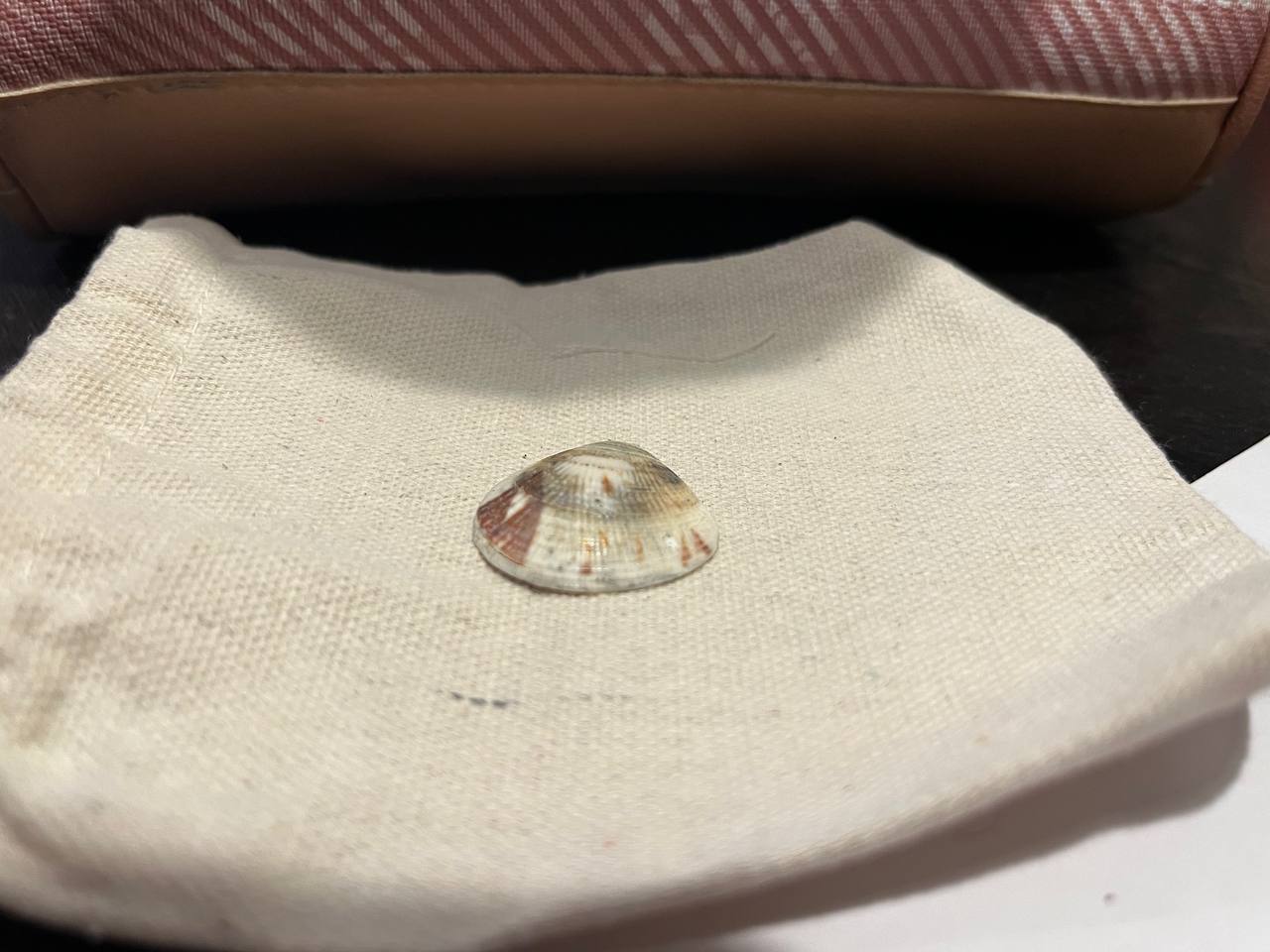
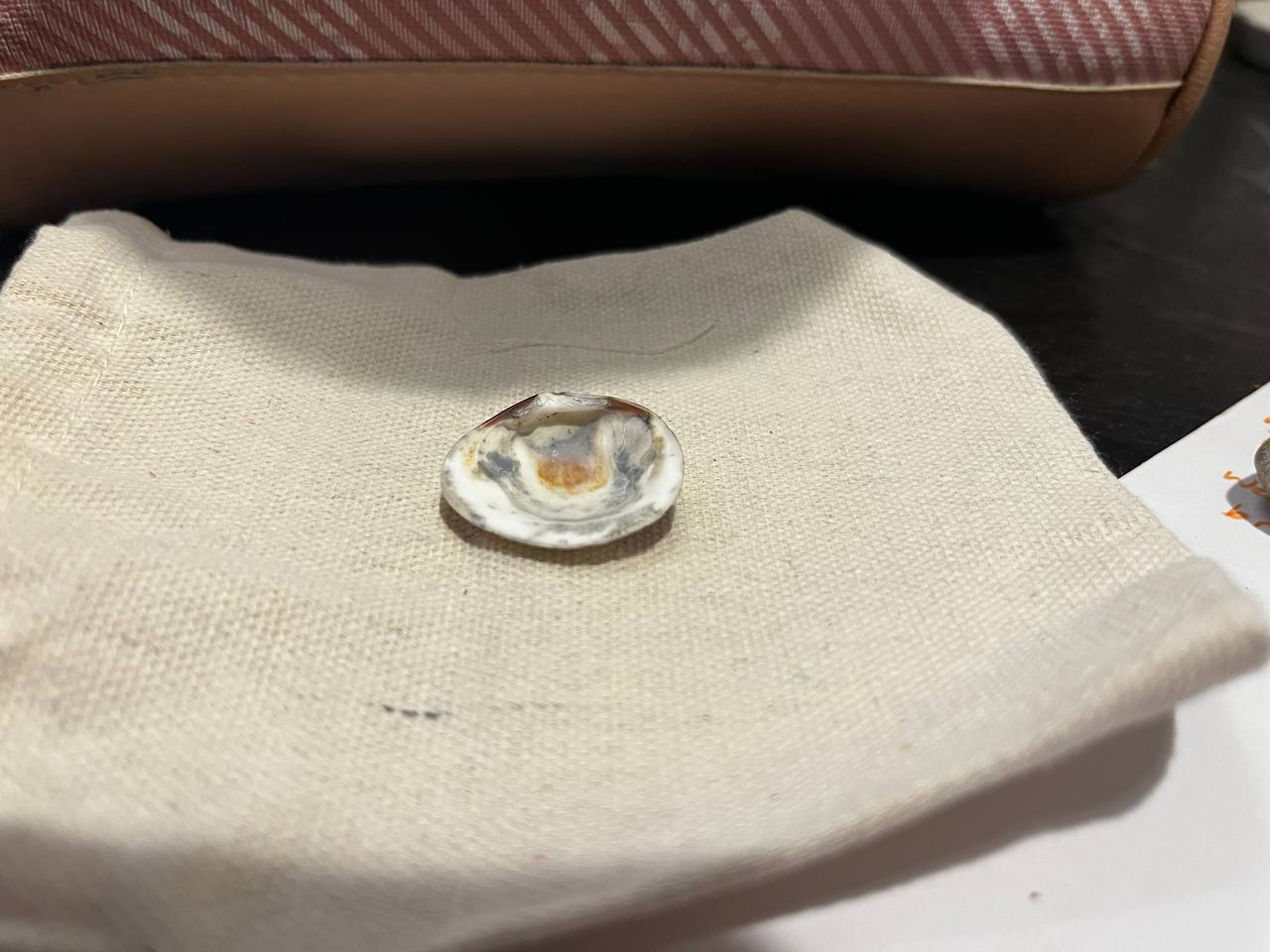
A shell — a small bivalve clam, shown outside then inside. The outside is finely radially ribbed with soft reddish-brown rays fanning from the hinge (likely a small Venus clam / dosinid or a young cockle — Veneridae/Cardiidae). The inside is the smooth, pale, slightly pearly face with grey-and-orange staining.
Quick read
- Fine ribs + colour rays radiating from the hinge → the build-and-pigment pattern of a burrowing sand clam (see the rib-vs-band logic in shell-collection).
- The reddish rays are pigment (porphyrins/carotenoids) laid down by the mantle along growth — the same colour story as colours-of-shells.
- Inside staining (grey/orange) is iron and organic pickup after the animal died.
What it’s made of
The usual shell recipe: calcium carbonate (CaCO₃) as aragonite/calcite on a protein scaffold, built edge-first by the mantle (full process in seashells).
Tiny clams like this live just under the sand in the shallows and wash up by the thousand on Indian beaches.
Filed under the natural-artifacts collection.