Shell Collection — Top & Bottom Views
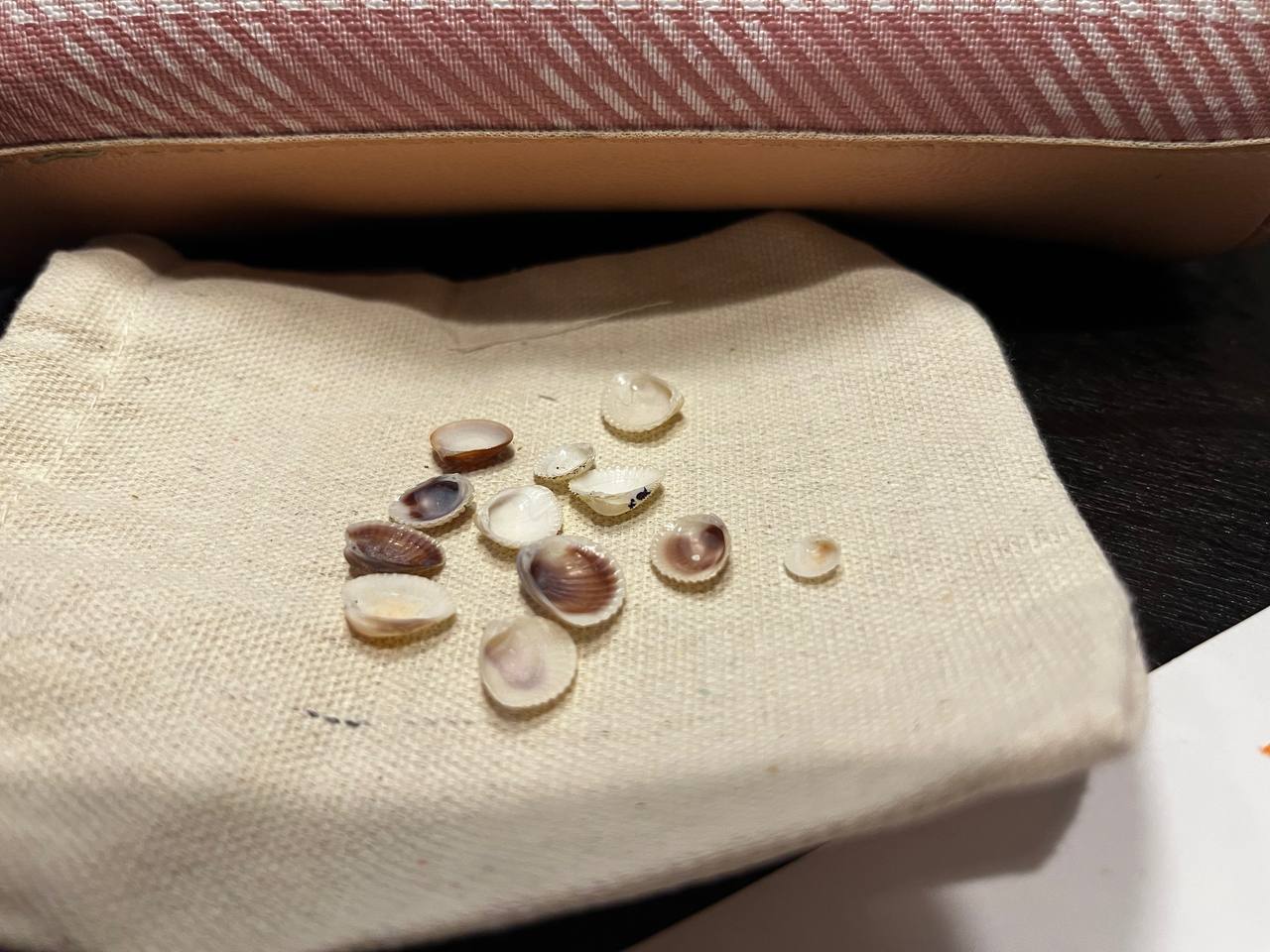
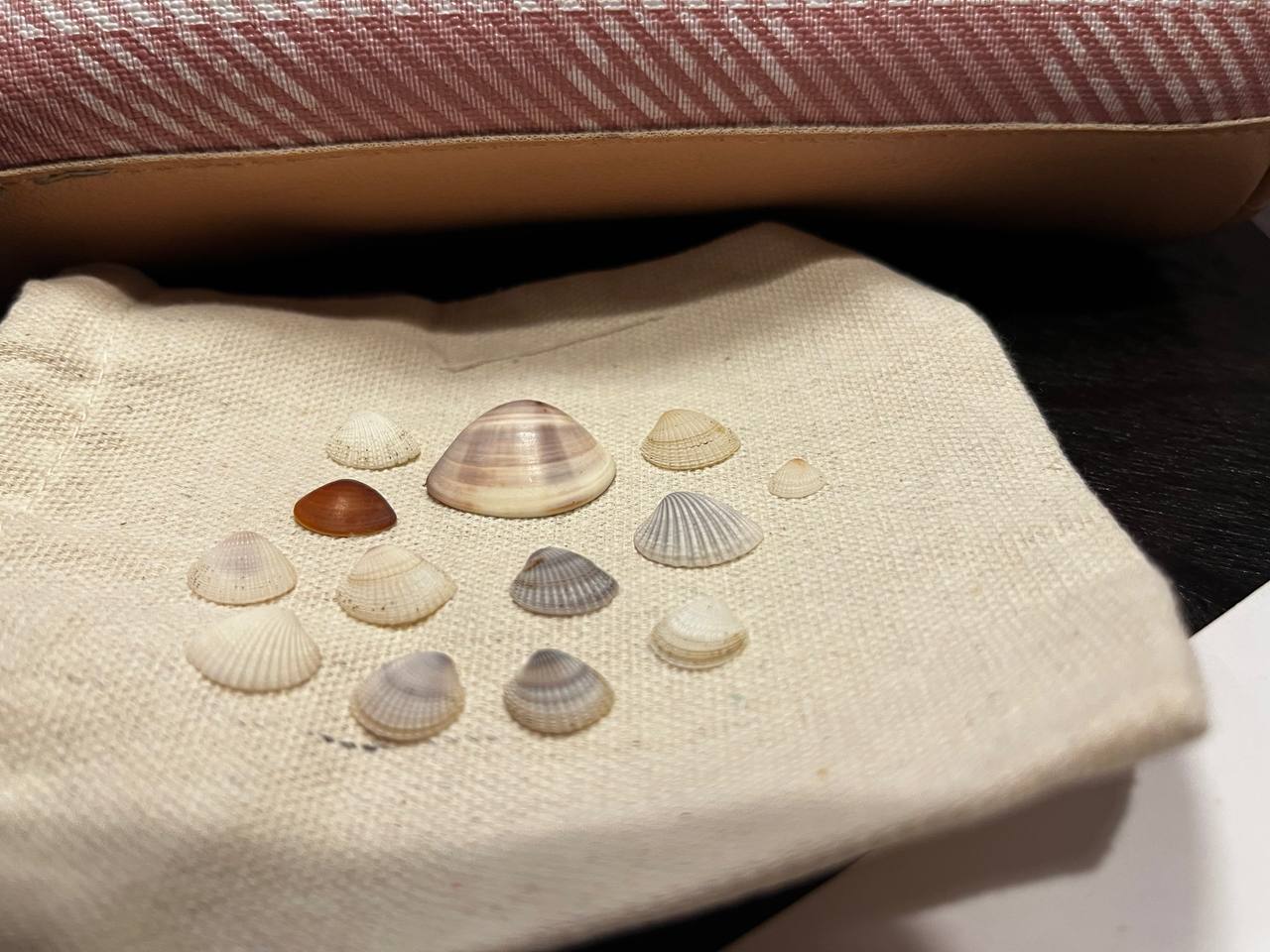
Laid out together you can see this is a mix of several bivalve types, not one — and the two views (outside vs inside) are exactly what reveal it.
What the patterns tell you
1. Ribs vs. bands = different families.
- Shells with radial ribs fanning out from the hinge are cockles (Cardiidae). Those ribs are structural — they stiffen a thin shell like corrugations stiffen cardboard, so a small animal can build a strong shell with little material, and they grip the sand so waves don’t wash it out.
- Shells that are smooth with only concentric colour bands are wedge/tellin clams (Donacidae/Tellinidae) — fast burrowers that trade ribs for a slick shape that knifes into wet sand quickly.
So the pattern itself is a fingerprint of how the animal lived: ribbed = anchored armour; smooth = speed-burrower.
2. The top (outside) is the calendar; the bottom (inside) is the mirror.
- The outside shows growth lines and pigment bands — the animal’s life history written in rings (see seashells for how those form). Count and spacing of bands ≈ seasons of growth.
- The inside is the nacre (mother-of-pearl) layer — smoother and pearly, often with faint muscle scars (where the clam’s closing muscles attached) and a pallial line near the rim. Those scars are why you can tell which way the animal sat inside.
3. Colour spread. The range from white to grey-blue to purple-banded to that single amber one comes from different pigments (porphyrins/carotenoids) and different amounts of bleaching after death — older, more wave-tumbled shells lose colour and gloss. The shiniest, most saturated ones are the freshest.
4. Size sorting. The fact that they’re all small and similar-sized is itself a clue — beaches naturally sort shells by size and weight in the swash zone, so a handful picked from one spot tends to be the same size class.
How many types, roughly
From these two views: at least two clear families (cockles + wedge/tellin clams), and quite possibly 3–4 species once you separate by rib count and outline. Exact species needs the hinge teeth, so I’m holding at family level on purpose.
Filed under the natural-artifacts collection. See also: seashells.