Mussels, Cockles & Mother-of-Pearl
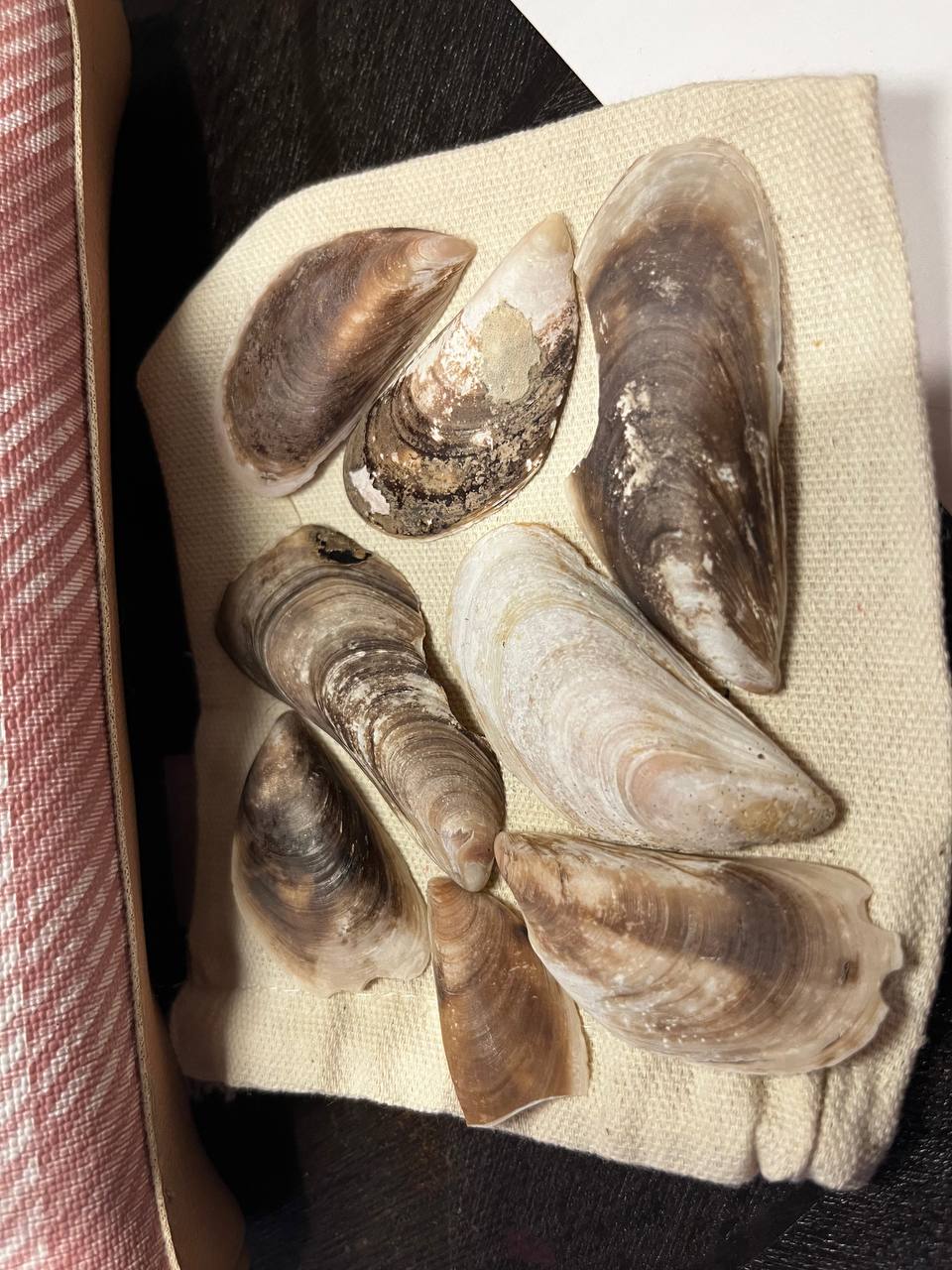
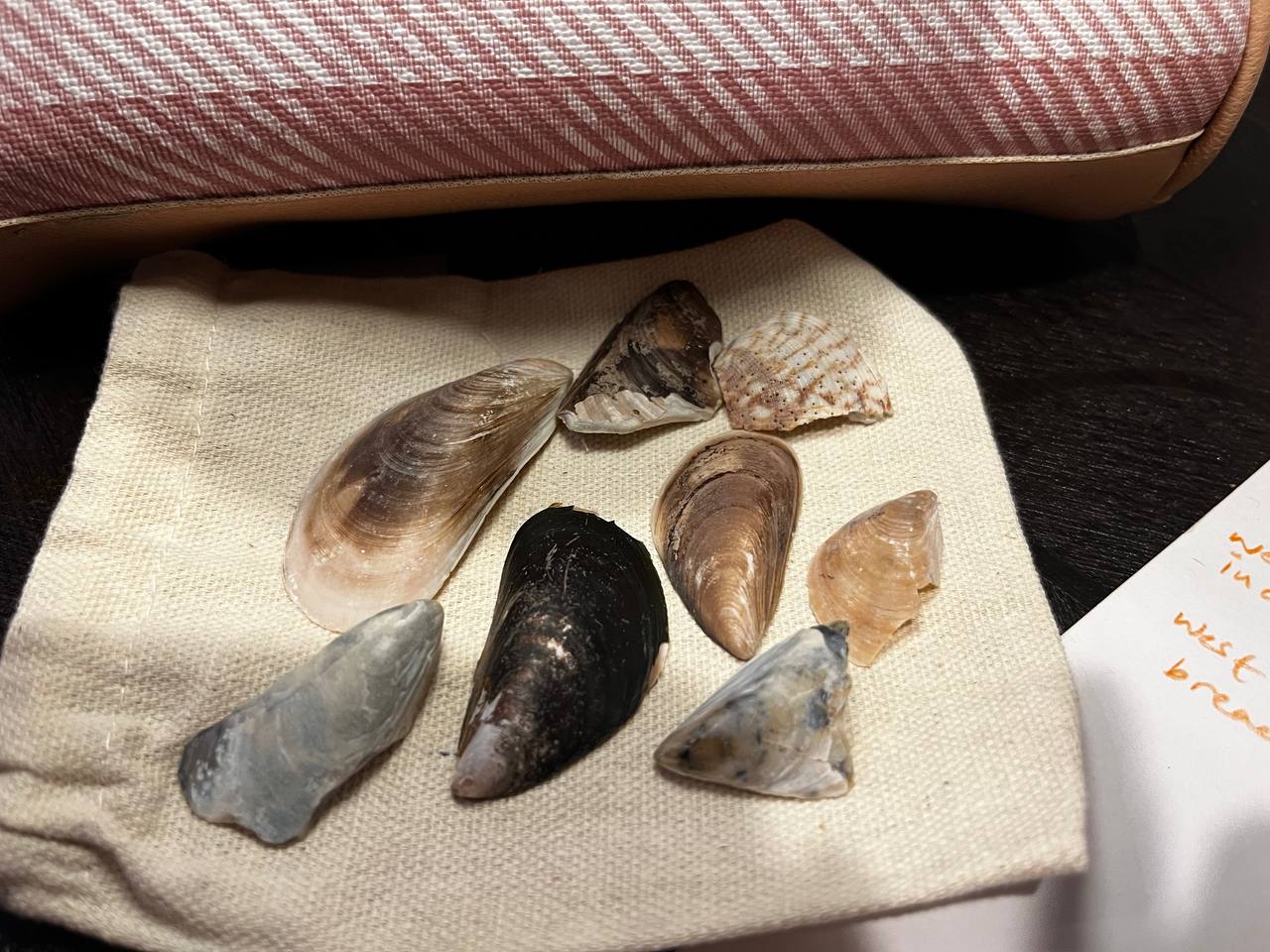
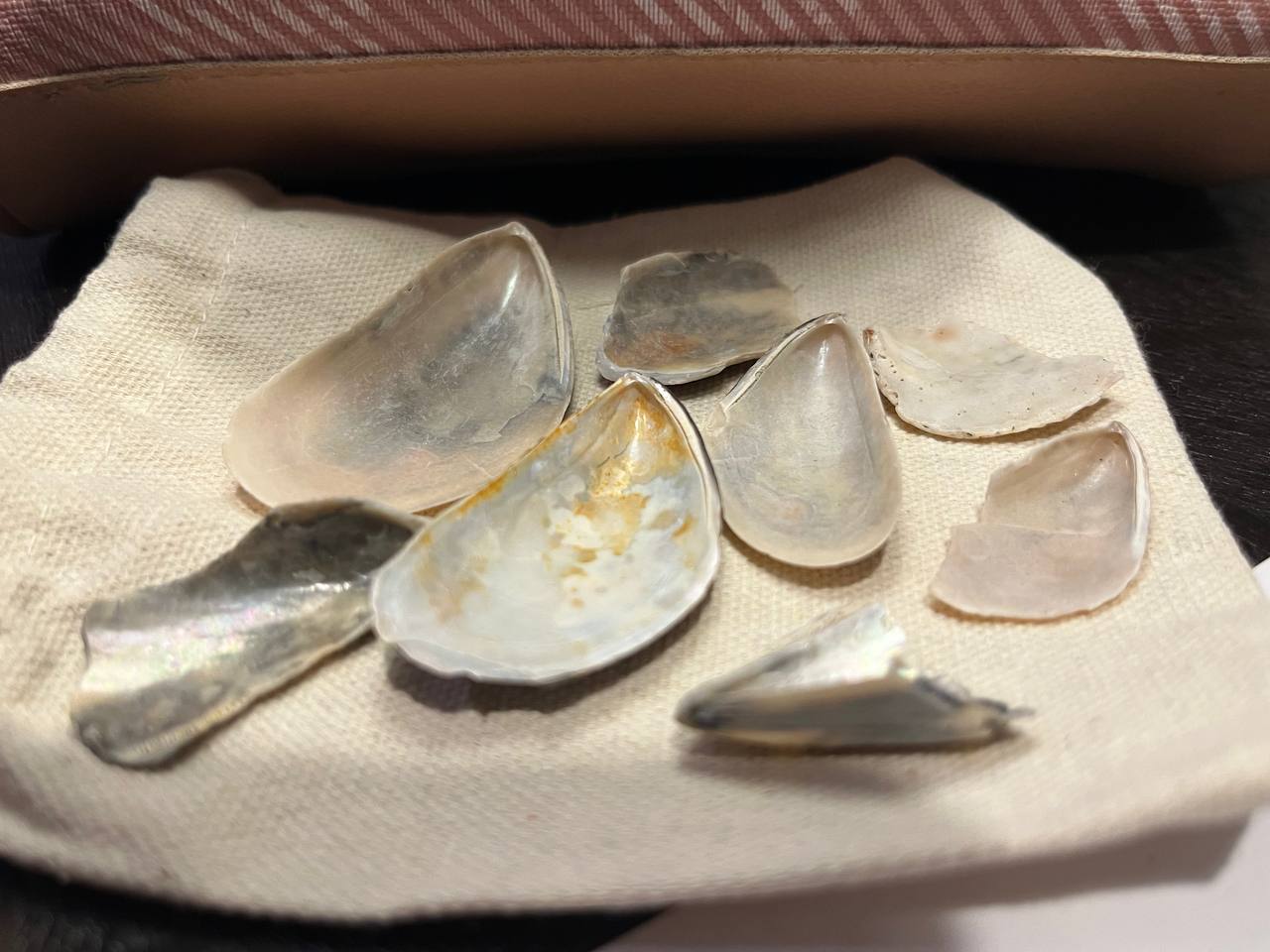
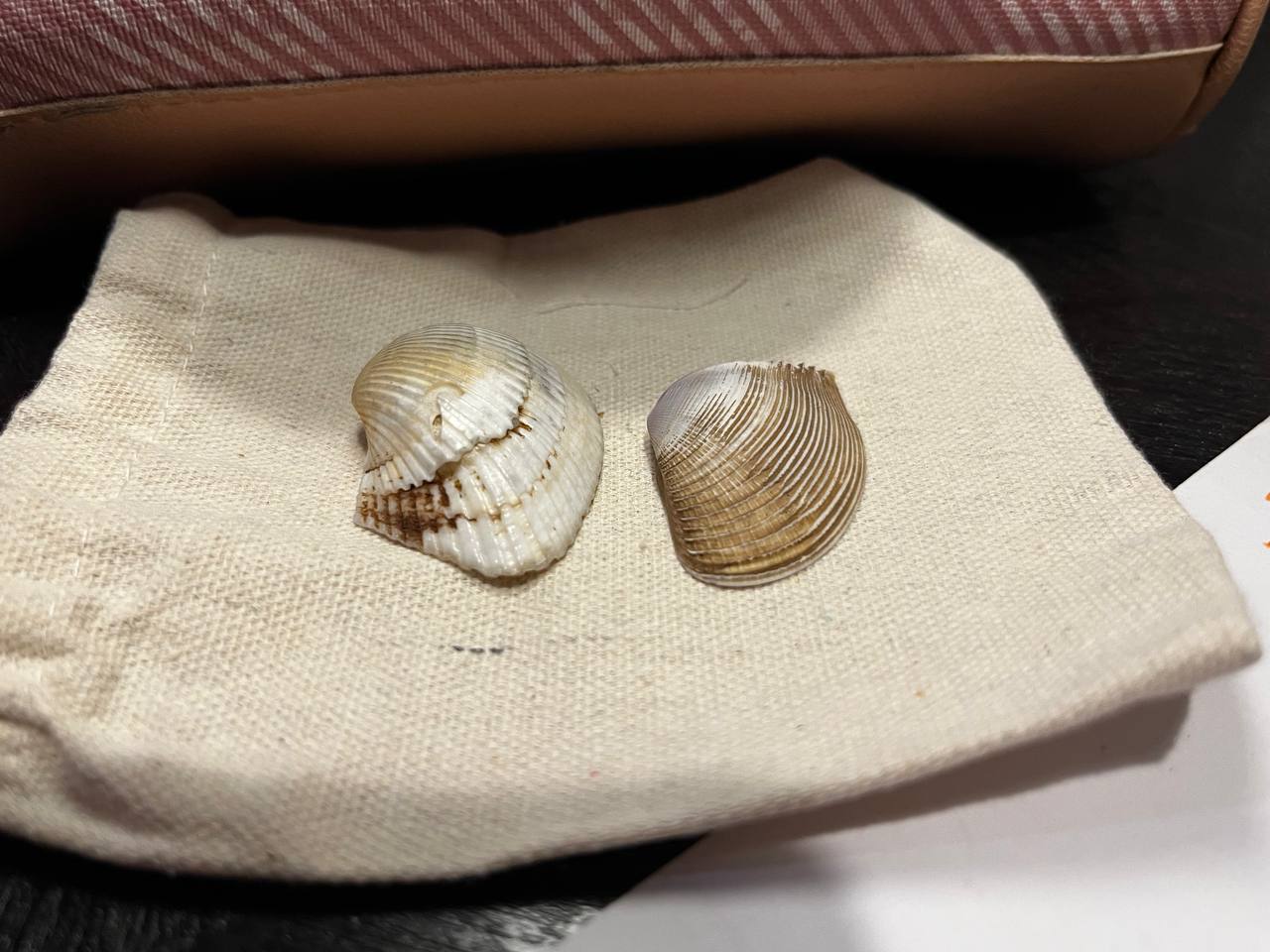
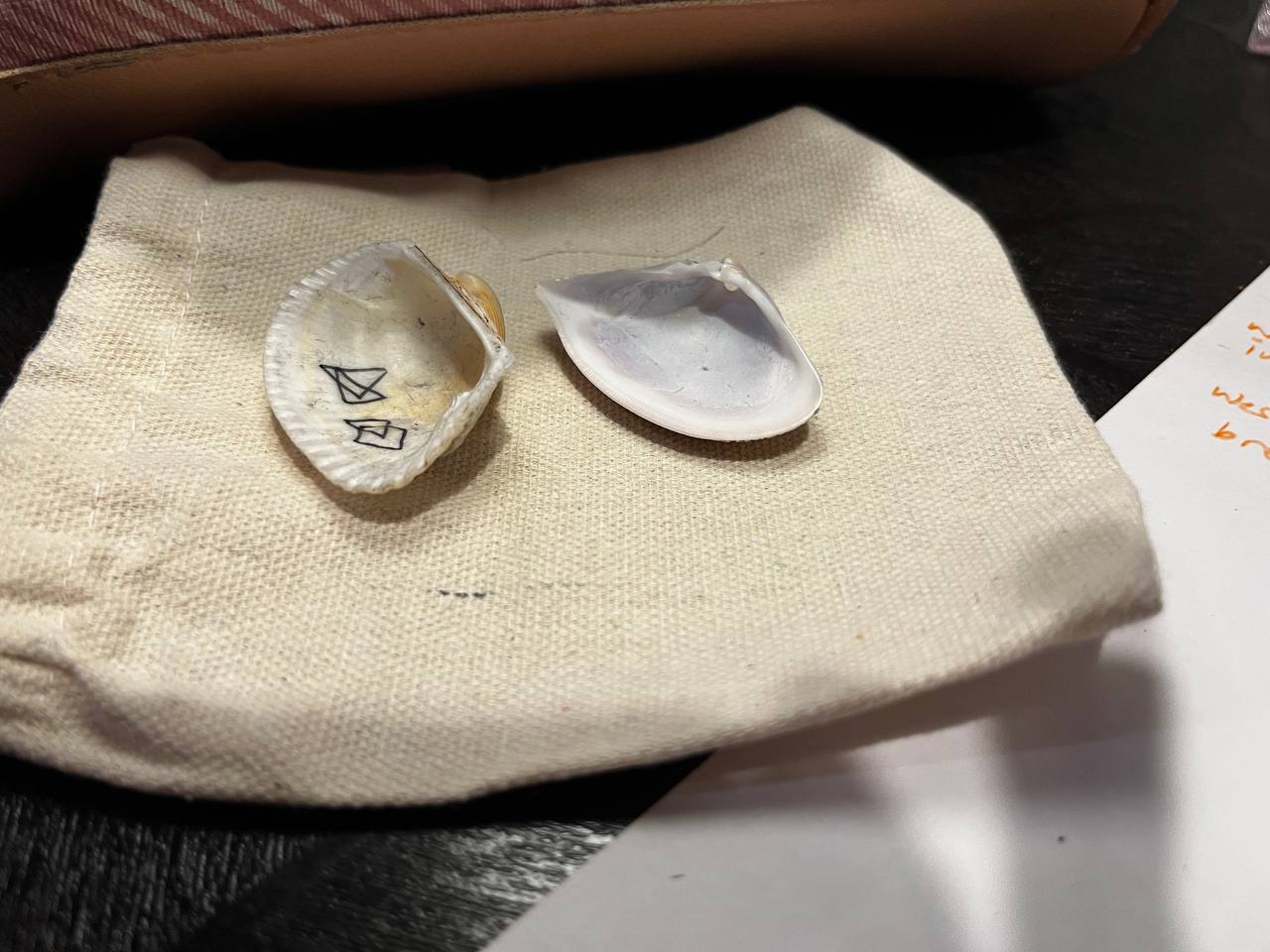
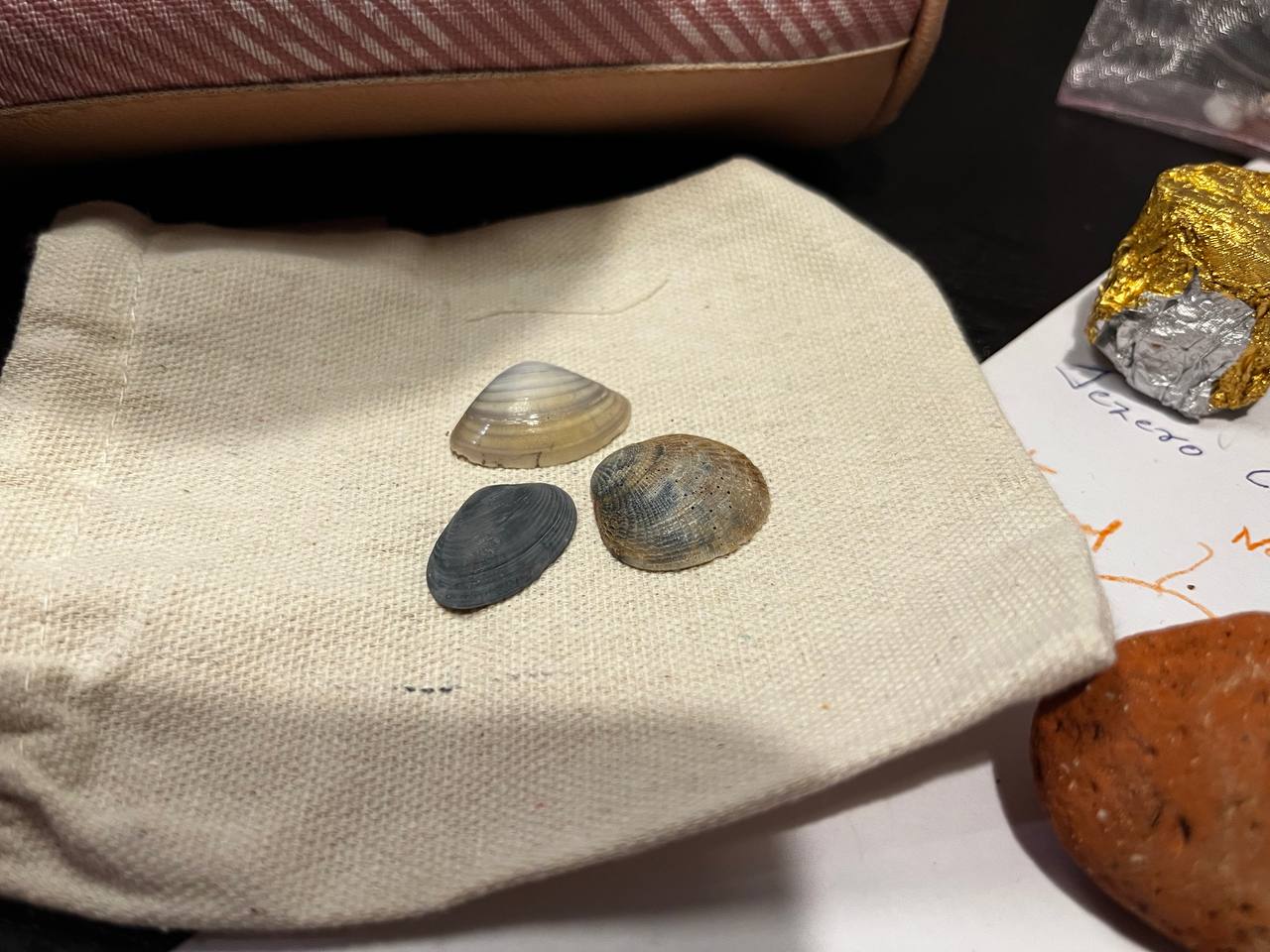
A whole mixed tray here, top and bottom views. Going through each:
- The long, glossy, elongated brown shells → mussels (family Mytilidae). The teardrop/wedge outline and the way they’re longer than wide is the mussel signature. In life they anchor to rocks with tough byssal threads (“beard”). Brown/black outside is the periostracum (protein skin); the inside is pearly.
- The strongly fan-ribbed shells → cockles / ark clams (Cardiidae / Arcidae) — radial ribs for strength and grip (see shell-collection).
- The bright, silvery, iridescent fragments → nacre (mother-of-pearl) — the inner shell layer, here exposed because the dull outer layers wore away. The rainbow shimmer is structural colour: light interfering between stacks of micro-thin aragonite tiles. Same stuff a pearl is made of.
- The two shells with little ink drawings inside → bivalve interiors (a ribbed cockle + a smooth clam) you’ve doodled tiny boat/diamond shapes on — the concave nacreous inner face makes a nice canvas.
- The small grey-banded ones → little clams (wedge/Venus clams), same family logic as seashells.
What they’re all made of
Every one of these is the same recipe: ~95% calcium carbonate (CaCO₃) — laid down as the minerals aragonite and calcite — on a protein (conchiolin) scaffold, built edge-first by the animal’s mantle. The differences you see (ribs vs smooth, brown vs pearly vs black) are just sculpture, pigment, and which layer is showing, not different materials.
Note: a couple of photos from this set didn’t reach me (failed downloads), so this covers the shells that came through. Resend the two that failed and I’ll add them.
Filed under the natural-artifacts collection. See also: seashells, shell-collection.