Four Fragments
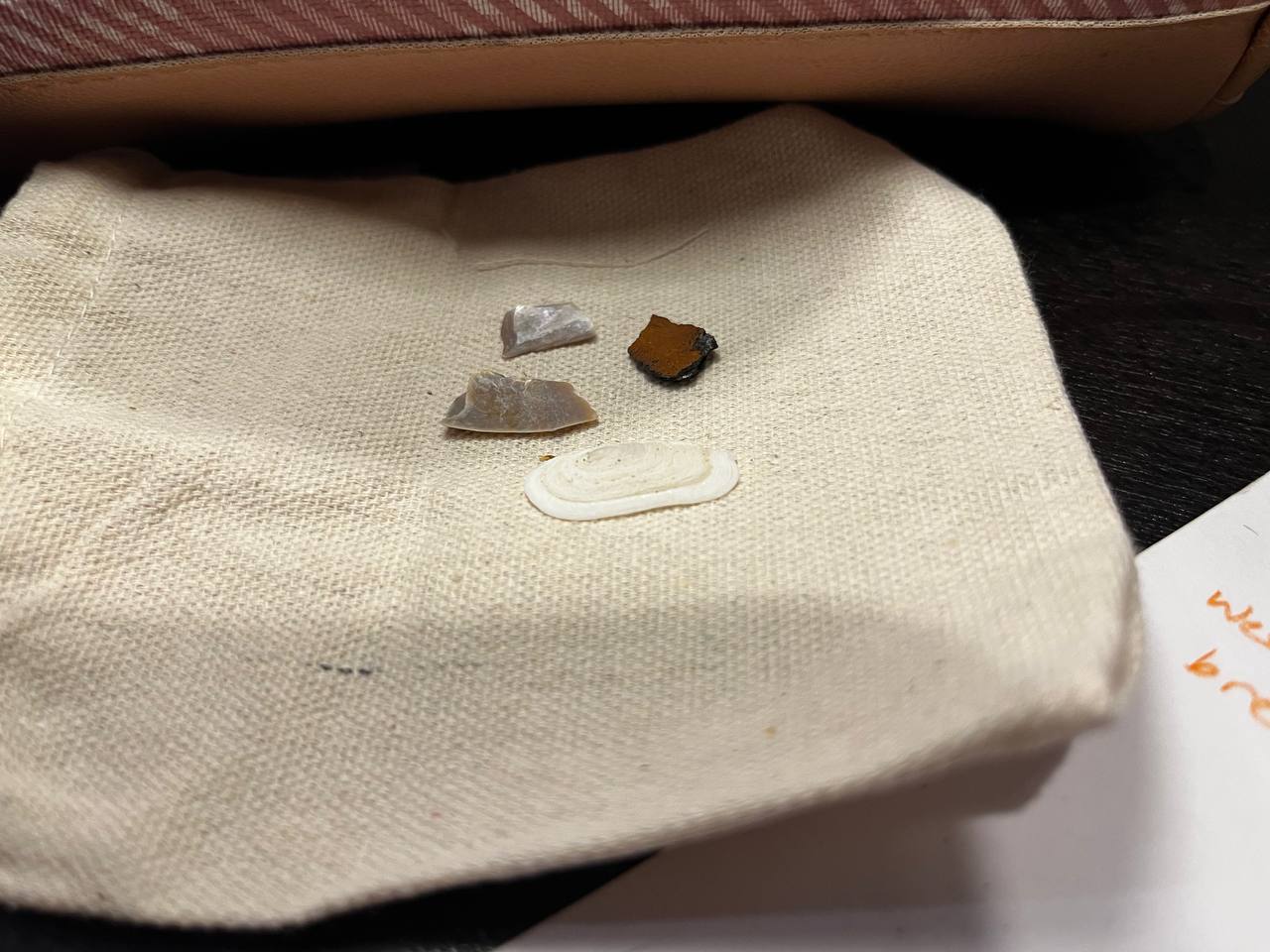
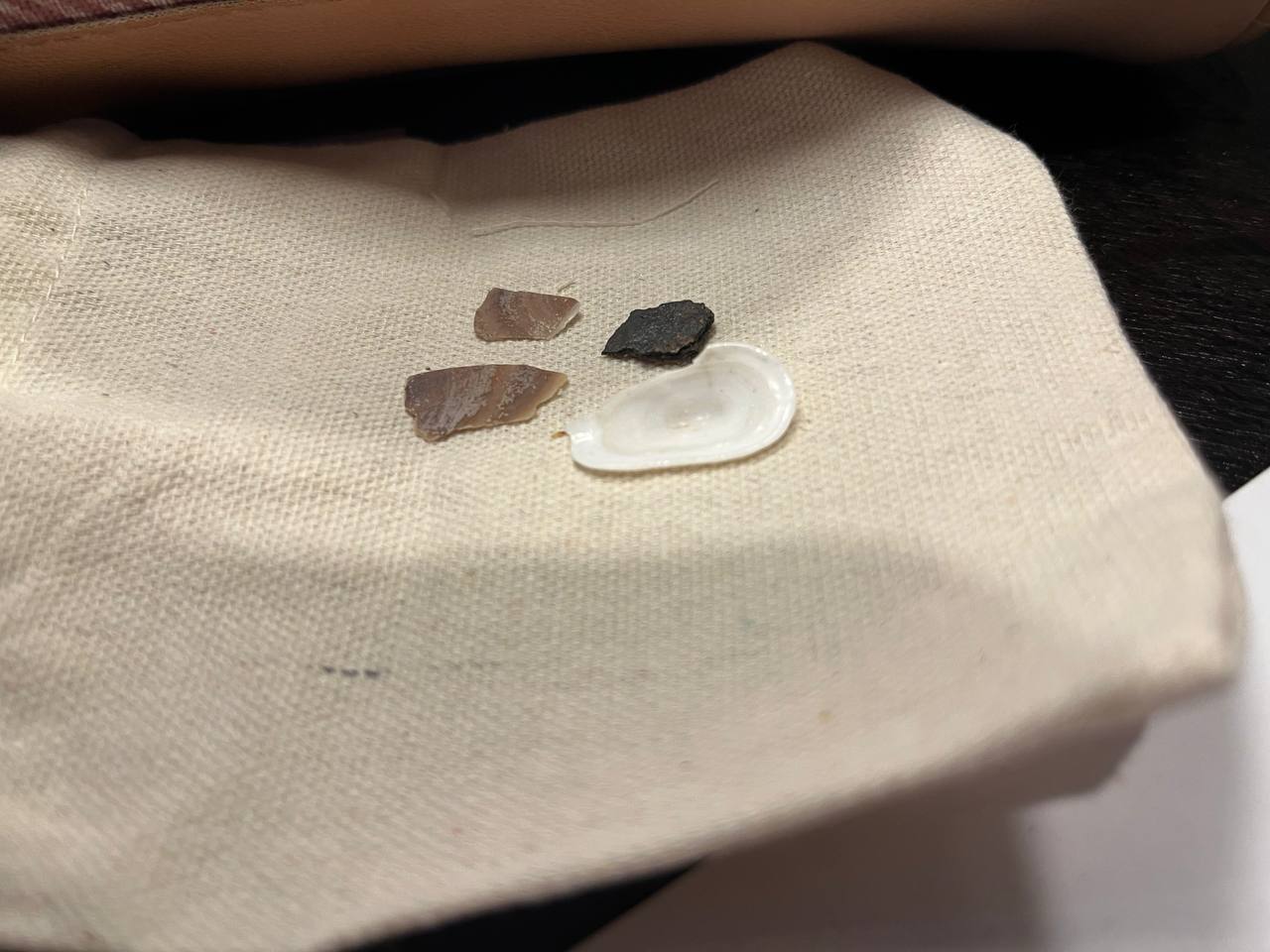
You’re right that these are different types — they’re a mix of mineral and shell, not all one thing. Best read of the four (these are small and beach-worn, so I’m giving most-likely IDs + a test for each):
1. The frosted, sub-translucent pale chip → chalcedony / agate (or sea glass)
A waxy, slightly see-through silica pebble fragment — chalcedony (microcrystalline quartz, SiO₂). History: silica-rich water seeped into a gas cavity in old volcanic rock (the Deccan basalts are full of these), slowly depositing chalcedony layer by layer over ages; the rock weathered out, rivers and waves tumbled and frosted the fragment. Test: it’ll scratch glass (hardness 7). If instead it’s softer and has very even frosting, it could be sea glass (man-made glass tumbled smooth) — the one “fake” in the set.
2. The rusty red-brown angular chip → ironstone / laterite (or terracotta)
Iron-rich. History: in hot wet climates, rock weathers and iron oxides (hematite/goethite) concentrate into hard rusty crusts called laterite — the classic red soil/stone of the Indian peninsula. Test: it’ll leave a rust-brown streak on rough tile. If it’s a fired brick-red with a smooth face, it may be a chip of terracotta (human-made pottery) — also iron-rich, also worn by water.
3. The brown waxy translucent chip → agate / carnelian
Another silica fragment, the warm colour from traces of iron oxide inside the chalcedony (that’s literally what makes carnelian orange-red). History: same as #1 — formed in a volcanic cavity, weathered out, tumbled. India’s Gujarat agates (Ratnapur/Khambhat) are world-famous and exactly this material.
4. The white oval with concentric rings → a shell fragment
Organic, not mineral: the beak/umbo of a bivalve (the oldest part, near the hinge) showing tight concentric growth rings, or a worn operculum. History: a clam built it from calcium carbonate at its shell edge over its life (see seashells for the full process); after death it broke and tumbled to this smooth chip. Test: a drop of vinegar will fizz on it (carbonate) — minerals #1–3 won’t.
The quick sorting logic
- Scratches glass, waxy, translucent → silica (agate/chalcedony)
- Rusty, leaves red streak → iron rock (laterite) or terracotta
- Fizzes in vinegar, has growth rings → shell
Filed under the natural-artifacts collection.