The Blue-Grey Chip
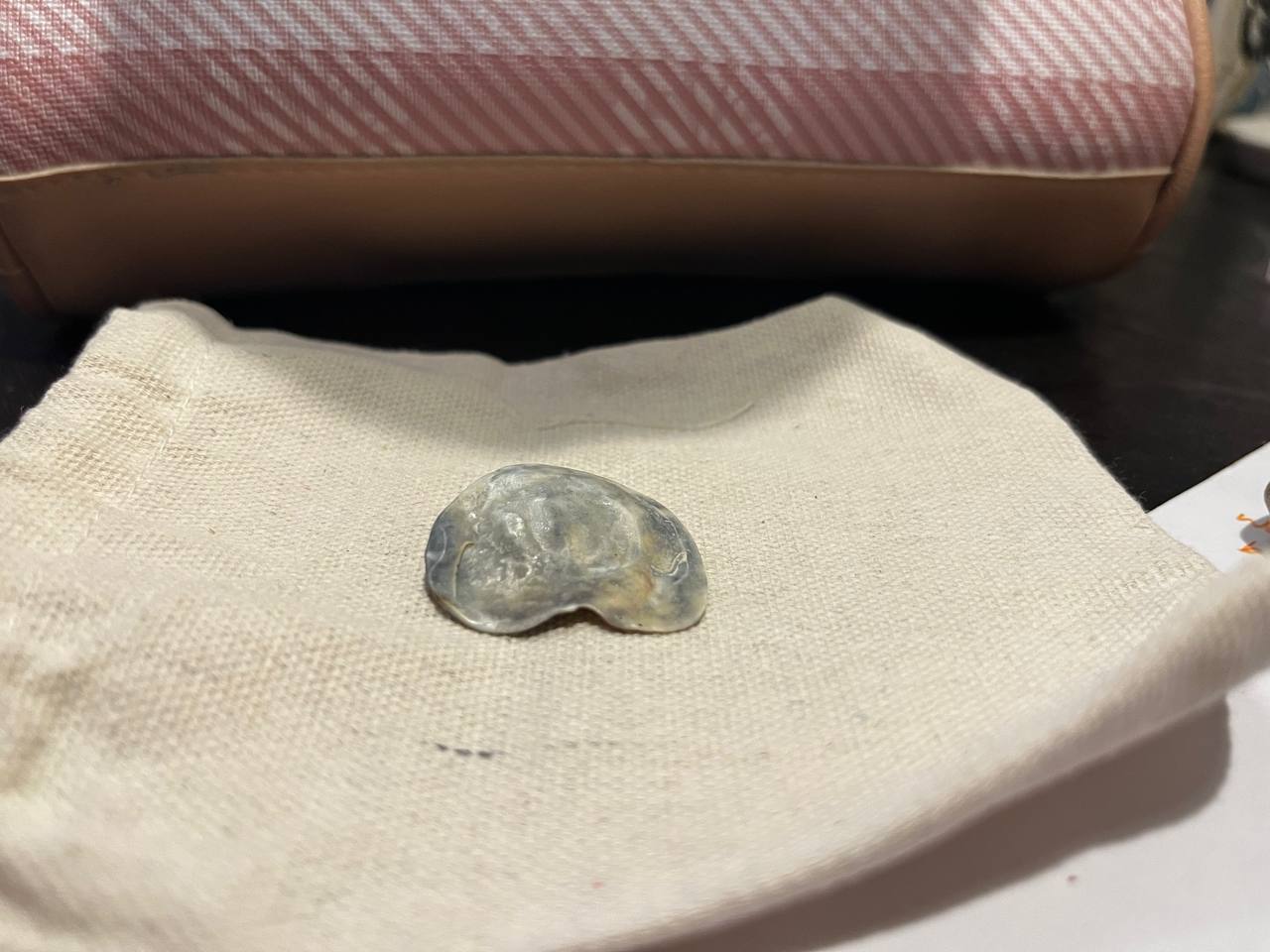
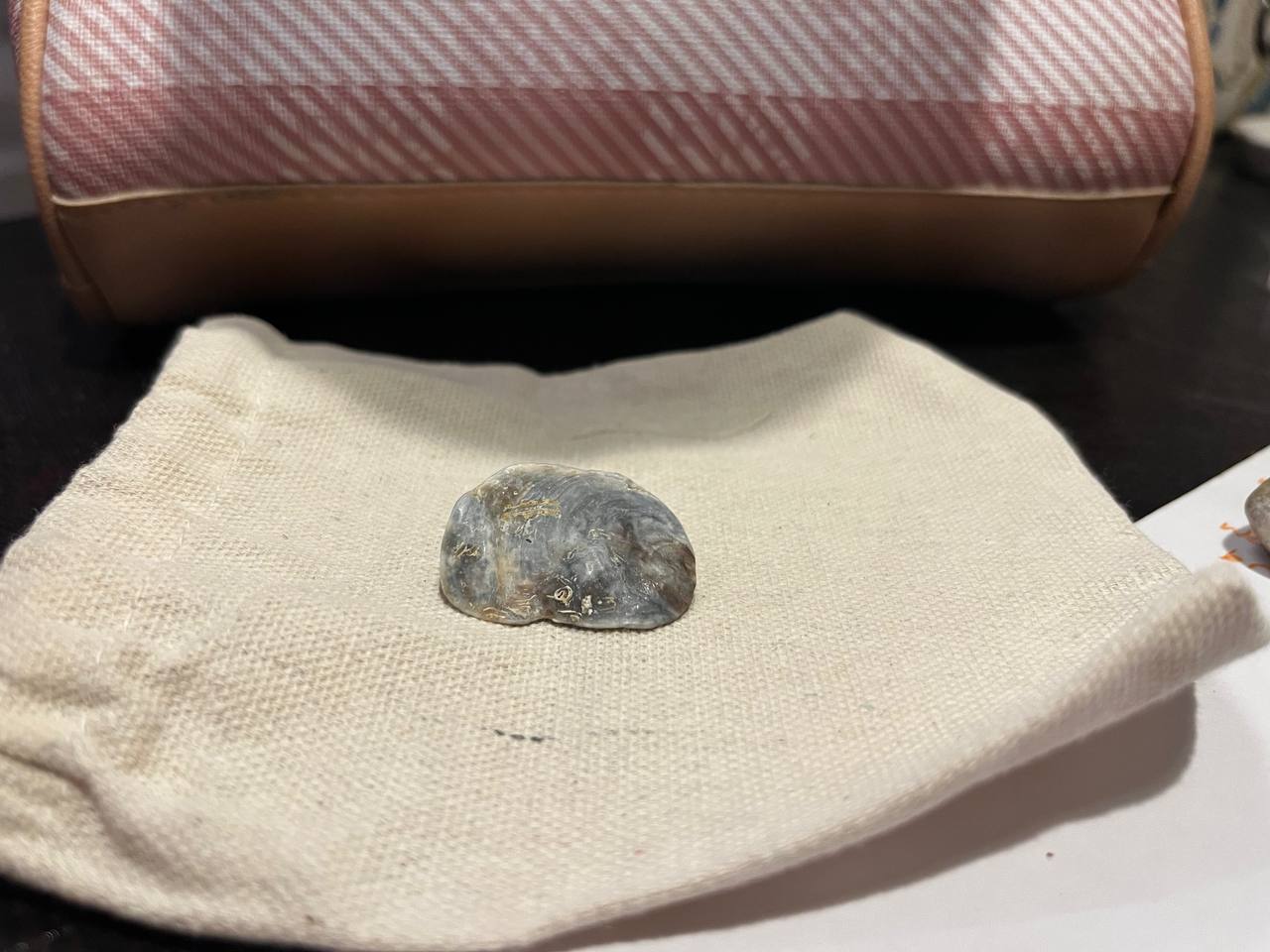
Another chip — shown rough-side and smooth-side. Blue-grey with cloudy mottling and a little yellow staining. Best read: a fragment of chert or grey chalcedony (microcrystalline silica, SiO₂) — the cloudy, waxy, slightly translucent look on the smoother face is classic chalcedony, while the rougher face is the weathered/cortex side of the nodule.
What the two faces tell you
- The rough, dull face is the cortex — the outer weathered rind that formed while the nodule sat in soil/sediment, chemically altered and softened.
- The smoother, cloudy-grey face is the fresh interior — denser, waxier, faintly see-through where thin. The blue-grey cloudiness is light scattering inside the microcrystalline silica.
So a single chip records both its buried life (the weathered crust) and its inner structure (the fresh silica) — outside vs inside.
Confirm: scratches glass, sharp conchoidal edges → silica (chert/chalcedony). If it fizzes in vinegar instead, it’s a carbonate; if it’s gritty and rubs off, a mudstone.
Filed under the natural-artifacts collection. See also: shiny-chip, four-fragments.