The Shiny Chip
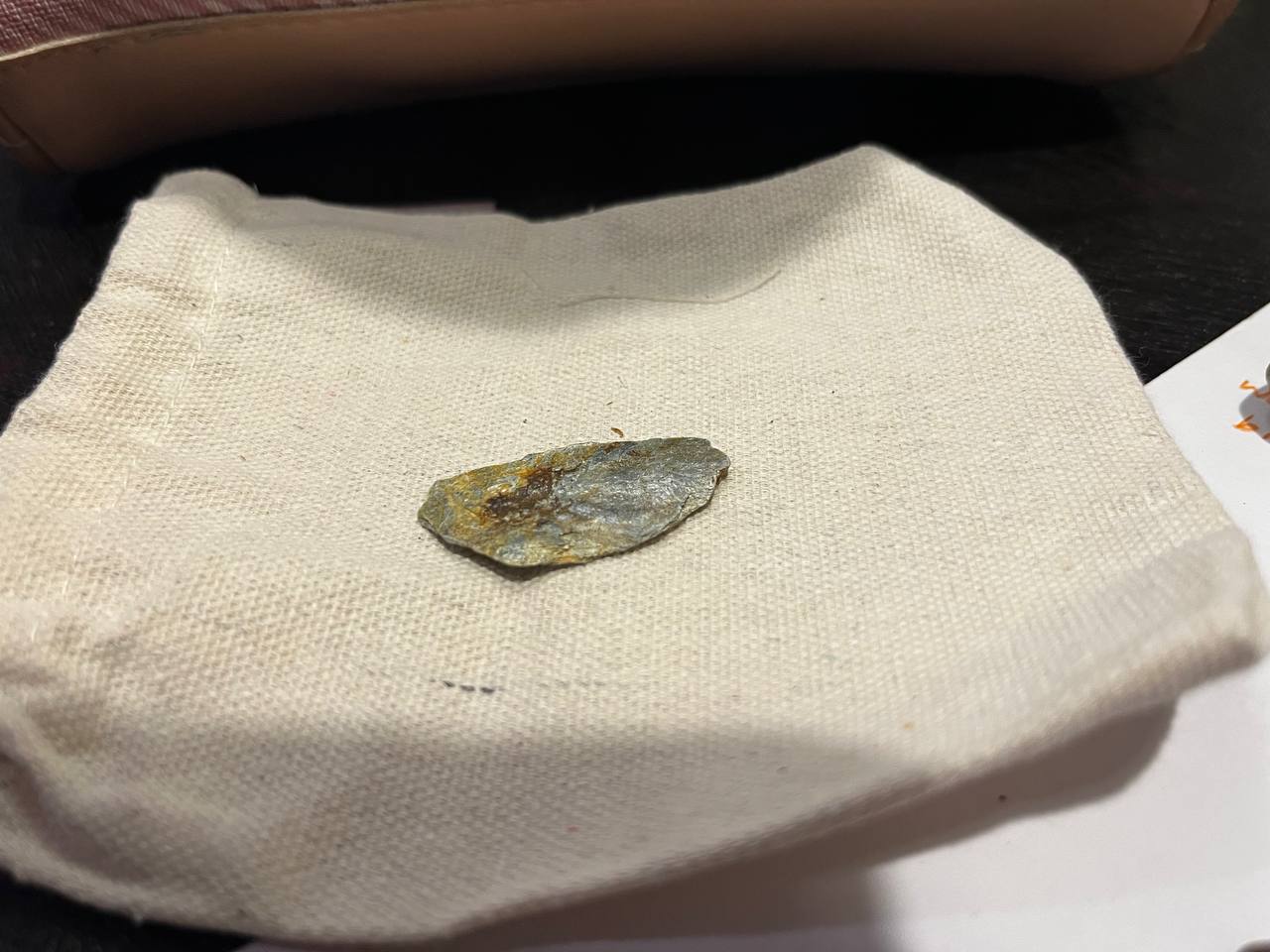
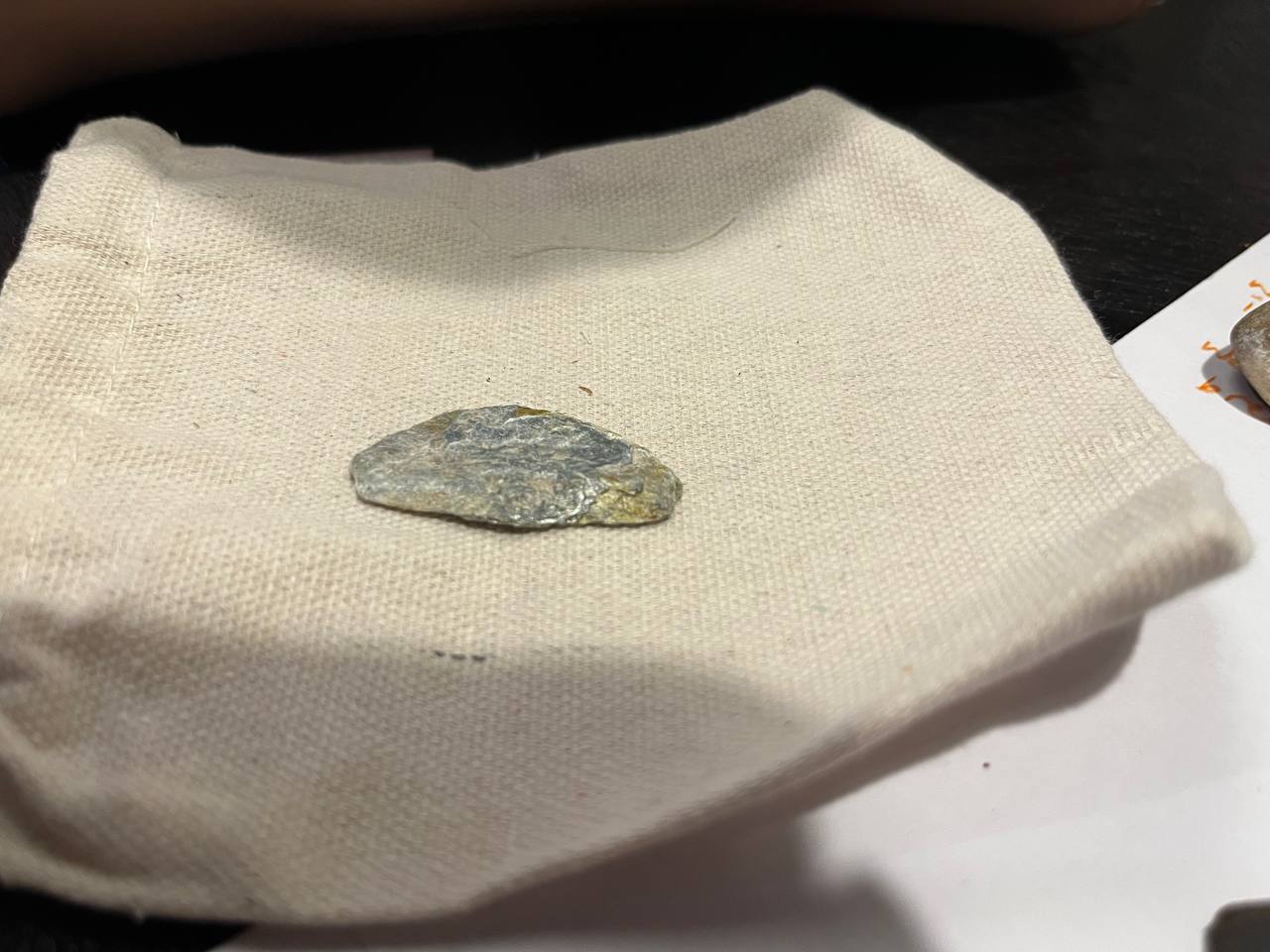
A flat, angular, blue-grey flake that shines and is “like a chip” — most likely a fragment of chert or quartzite (microcrystalline silica, SiO₂), with iron-oxide (rust) staining giving the orange-brown patches.
Why it shines
It shines because it’s broken along a smooth, glassy fracture face. Fine-grained silica (chert/flint/quartzite) breaks with a conchoidal (shell-like, curved) fracture that leaves a clean, almost polished surface — the same property that made these rocks the raw material for stone-age tools and arrowheads, because a struck flake gives a sharp shiny edge. So the shine isn’t a mineral coating; it’s the geometry of how silica shatters.
Quick confirm: it should scratch glass (hardness ~7) and the edge will feel sharp. If instead thin shiny sheets peel off, it’d be a flaky mineral like mica (see mica-schist); if it’s much softer and fizzes in vinegar, it’s something carbonate.
Where from
Chert nodules form inside limestones and as bands in sedimentary rock; quartzite is metamorphosed sandstone. Both are hard, survive river/beach tumbling well, and chip into exactly these flat sharp flakes — which is why they’re so common in gravels.
Filed under the natural-artifacts collection.