Silvery Flaky Rock — Mica Schist
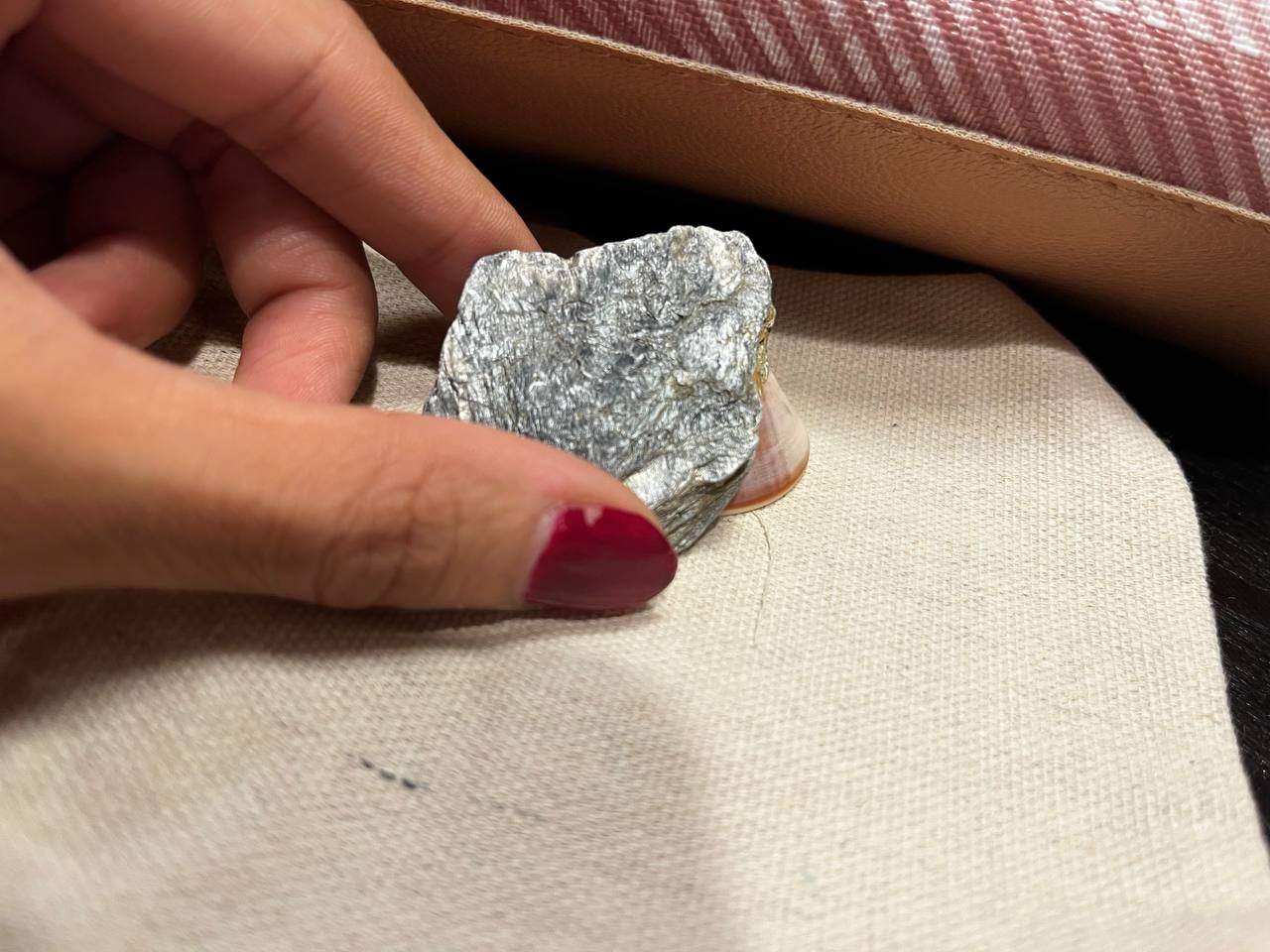
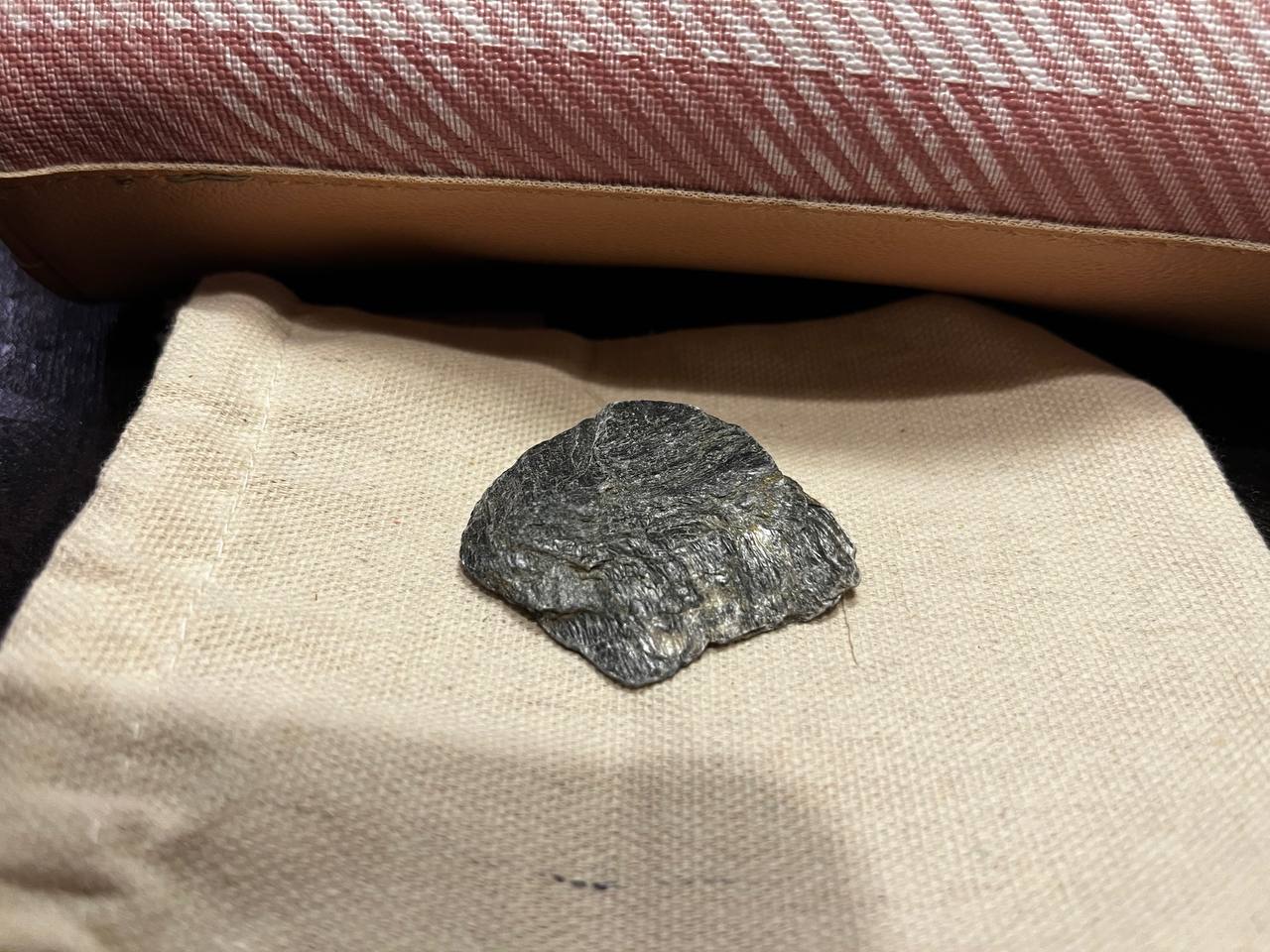
Most likely identity: A mica schist — a metamorphic rock made largely of muscovite mica, with quartz and feldspar mixed in. (The “felt cheap and shines in certain directions” description is almost a textbook giveaway for mica.)
Quick check: if you can peel/flake thin glittery sheets off it with a fingernail, it’s mica. If instead it’s heavy, hard, and leaves a rust-red streak when scraped on rough porcelain, it’s the look-alike micaceous hematite (an iron ore) — same sparkle, completely different material. Mica leaves no red streak and is light.
What it’s made of
Mica schist is dominated by mica minerals — here, silvery muscovite, chemically KAl₂(AlSi₃O₁₀)(OH)₂ (a potassium-aluminium silicate with water built into its structure). Around the mica sit grains of quartz (SiO₂) and feldspar. Mica’s defining property is perfect basal cleavage: it splits into incredibly thin, flexible, transparent sheets — which is exactly why the rock feels flaky and “cheap,” like it’s made of stacked foil.
Why it shines from only certain directions
This is the best part. Mica grows as flat plates, and in a schist all those plates are lined up in the same plane (that alignment is called foliation). When you tilt the rock so light hits all those parallel mirror-like cleavage faces at once, they reflect together and the whole surface flashes silver. Tilt it away and the flash disappears. So the “shines in certain directions” effect is thousands of tiny aligned mirrors catching the light simultaneously — the same reason a sequinned surface lights up at one angle only.
How it formed (and why the plates are aligned)
- Start with a mud or clay-rich sediment (a shale).
- Bury it deep and subject it to heat and directed pressure during mountain-building.
- The clay minerals recrystallise into mica. Crucially, the new mica flakes grow perpendicular to the squeezing direction — so they all end up parallel, giving the rock its layered, foliated, splittable texture.
That’s the signature of regional metamorphism: schist is what shale becomes when a continent collides. The crinkly, wavy layering you can see is that foliation, slightly folded by later pressure.
Where it’s found
Mica schists are extremely common in the roots of old mountain belts and ancient continental shields. In India they’re abundant in the Himalayas, the Aravalli range (Rajasthan), and the Precambrian shield rocks of peninsular India (Rajasthan, Jharkhand, Andhra/Telangana are classic mica country — India was historically a top muscovite producer).
Filed under the natural-artifacts collection.