Two Pebbles — the Banded One
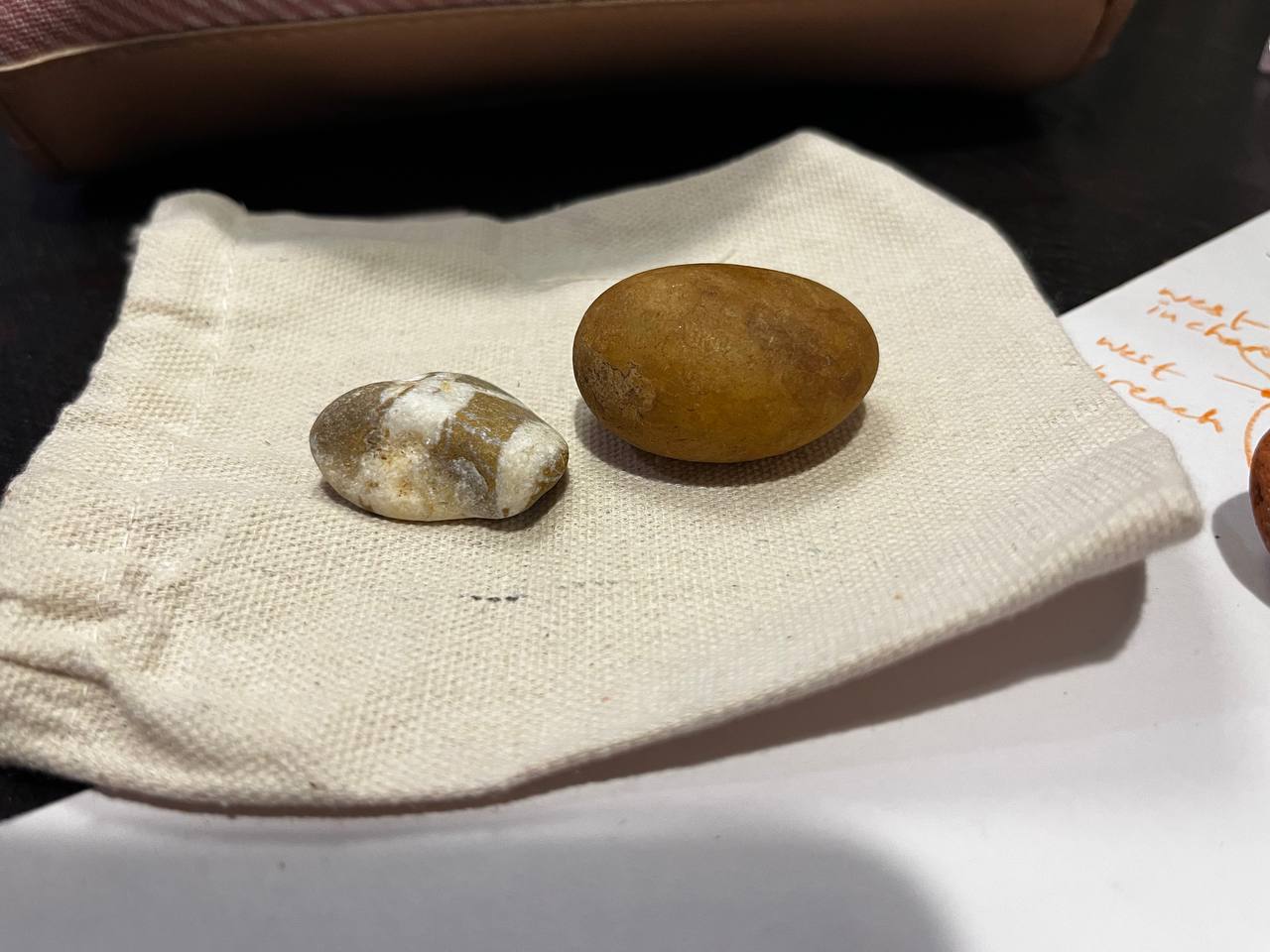
Rocks now. Two river/beach-tumbled pebbles:
The first one — with the white band
That bright white band running across the pebble is a quartz vein. Here’s the story it tells:
- The host rock cracked (stress, deep underground).
- Silica-rich hot water seeped into the crack and slowly deposited quartz (SiO₂) along it, healing the fracture with a pale, hard fill.
- Quartz is harder and whiter than the surrounding rock, so when the pebble later weathered out and tumbled smooth in water, the vein stayed proud and pale — a white stripe.
So the band is a fossil crack, filled and healed — it records that this stone was once broken deep in the crust and mended by mineral-laden water. (When such veins carry gold, this is literally what gold prospectors hunt for.) The white quartz pebble in white-quartz-pebble is the same material, just all vein.
The second one — the smooth tan pebble
A uniform, fine-grained tan pebble — most likely a chert / fine sandstone / jasper type, smoothed by long water transport. No band, no crystals visible to the eye = a very fine-grained rock. Test: if it scratches glass it’s silica (chert/quartzite); if vinegar fizzes, it’s a limestone.
Filed under the natural-artifacts collection.