Pale Pebble — and the Little Black “Fern”
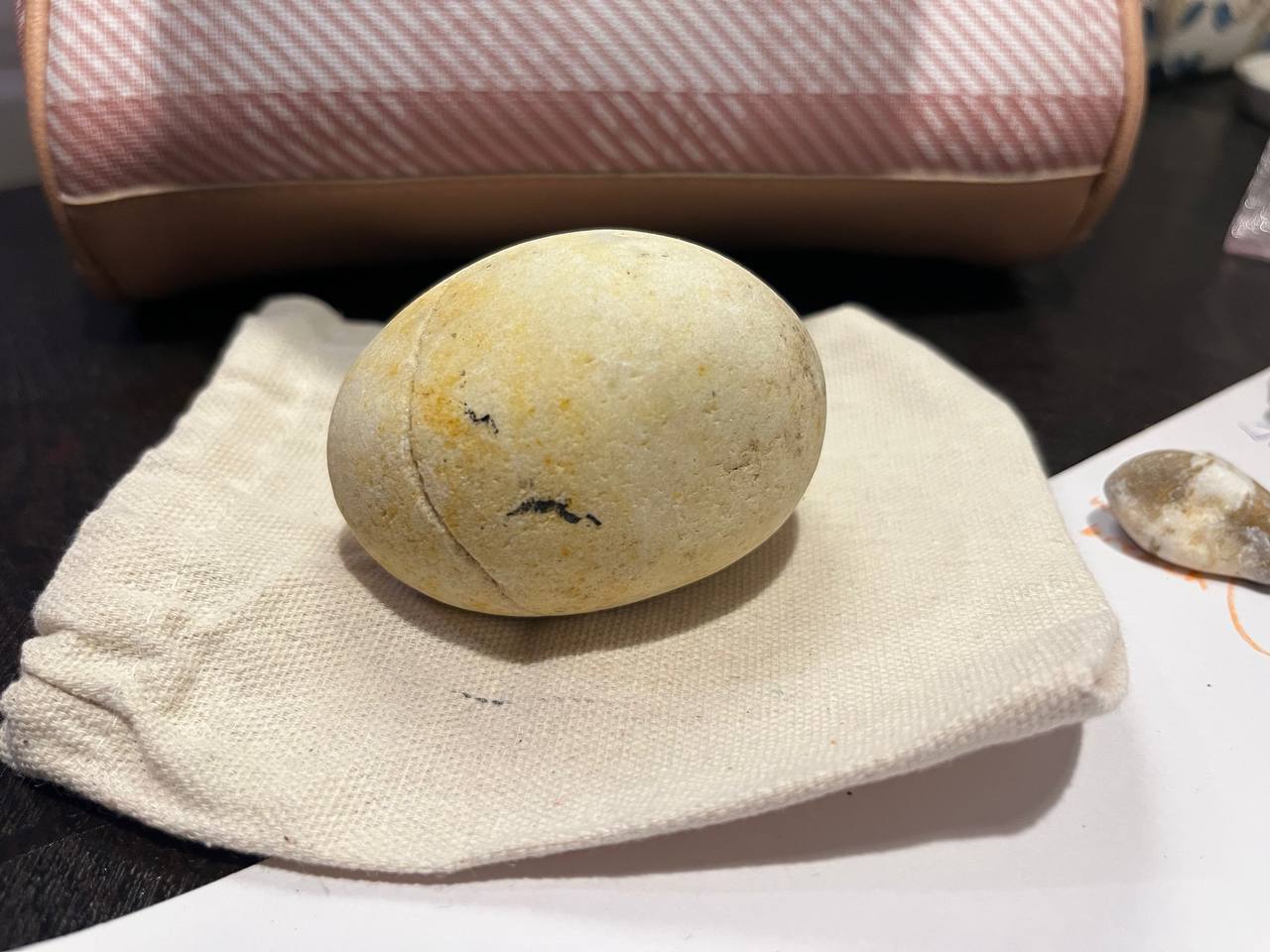
A pretty one. Two things to answer — what it’s made of / its type — plus the best hidden detail on it.
What it’s made of & type
A smooth, pale, hard ovoid pebble with faint orange staining and a fine crack. Most likely a quartzite or chert pebble — i.e. silica (SiO₂) — given the waxy, even, fine-grained surface and the way it’s tumbled hard and smooth. The faint orange patches are iron-oxide (rust) staining picked up from groundwater.
Pin down the type with two quick tests:
- Scratches glass / knife won’t scratch it → silica (quartzite or chert). Most likely.
- Vinegar fizzes → it’s a limestone/marble instead (calcium carbonate), and softer.
The little black branching mark — read this
That tiny black tree/fern shape is the gem of this pebble: it’s a manganese dendrite. It is not a plant or a fossil, even though it looks exactly like one. It formed when manganese-oxide-rich water seeped along a hair-thin crack in the stone and crystallised in a branching, self-repeating pattern — a mineral growing in fractal fingers, the same maths that makes frost ferns on a window or lightning branches. People are fooled into thinking dendrites are fossil moss all the time; they’re pure mineral chemistry imitating life. (“Dendrite” = Greek for “tree-like.”)
So on this one little stone you’ve got two stories: a silica pebble (the body) and a manganese dendrite (the black fern) — a mineral that grew like a plant without being one.
Filed under the natural-artifacts collection.