Black Fragments — What Element Are They Made Of?
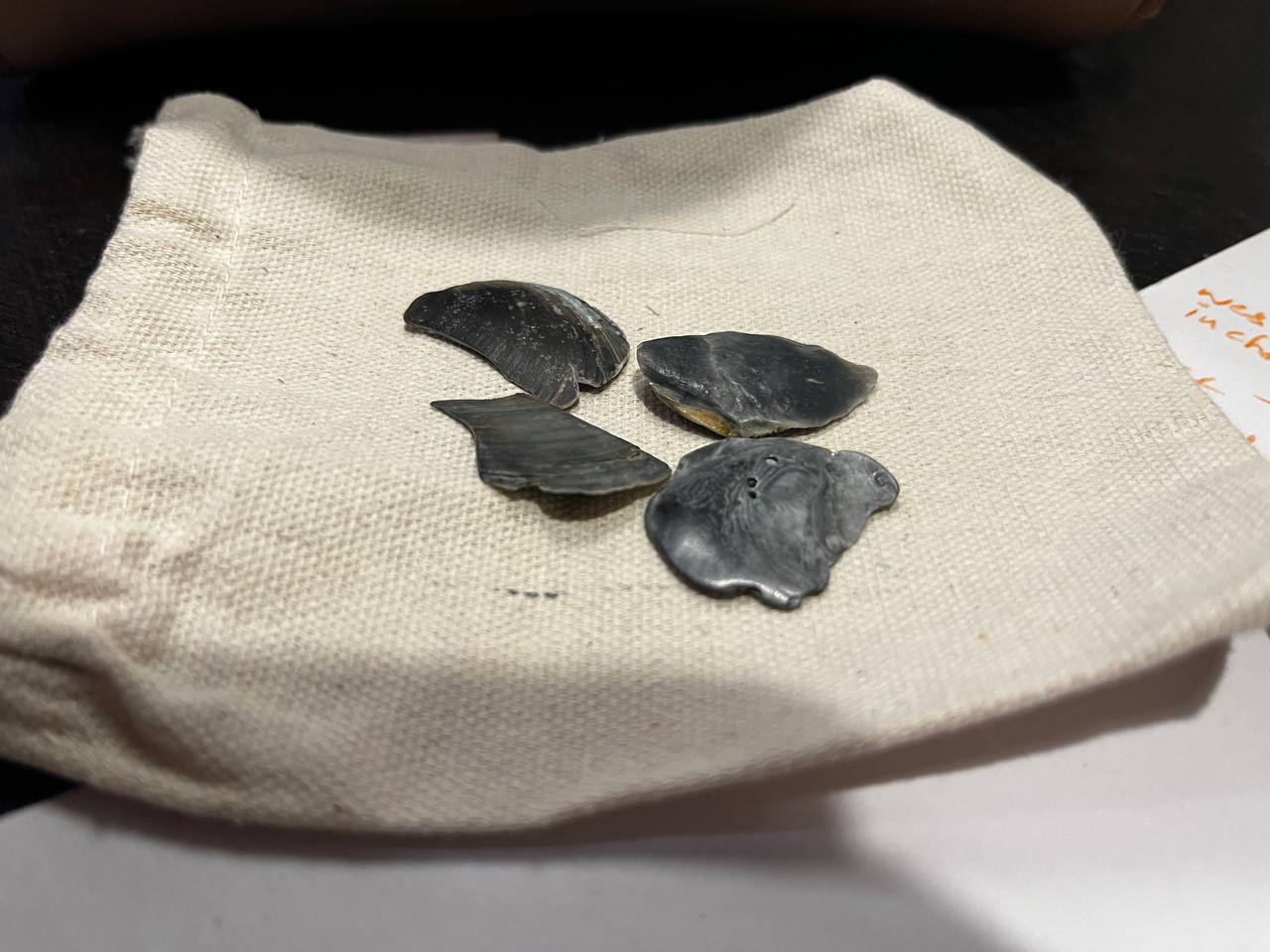
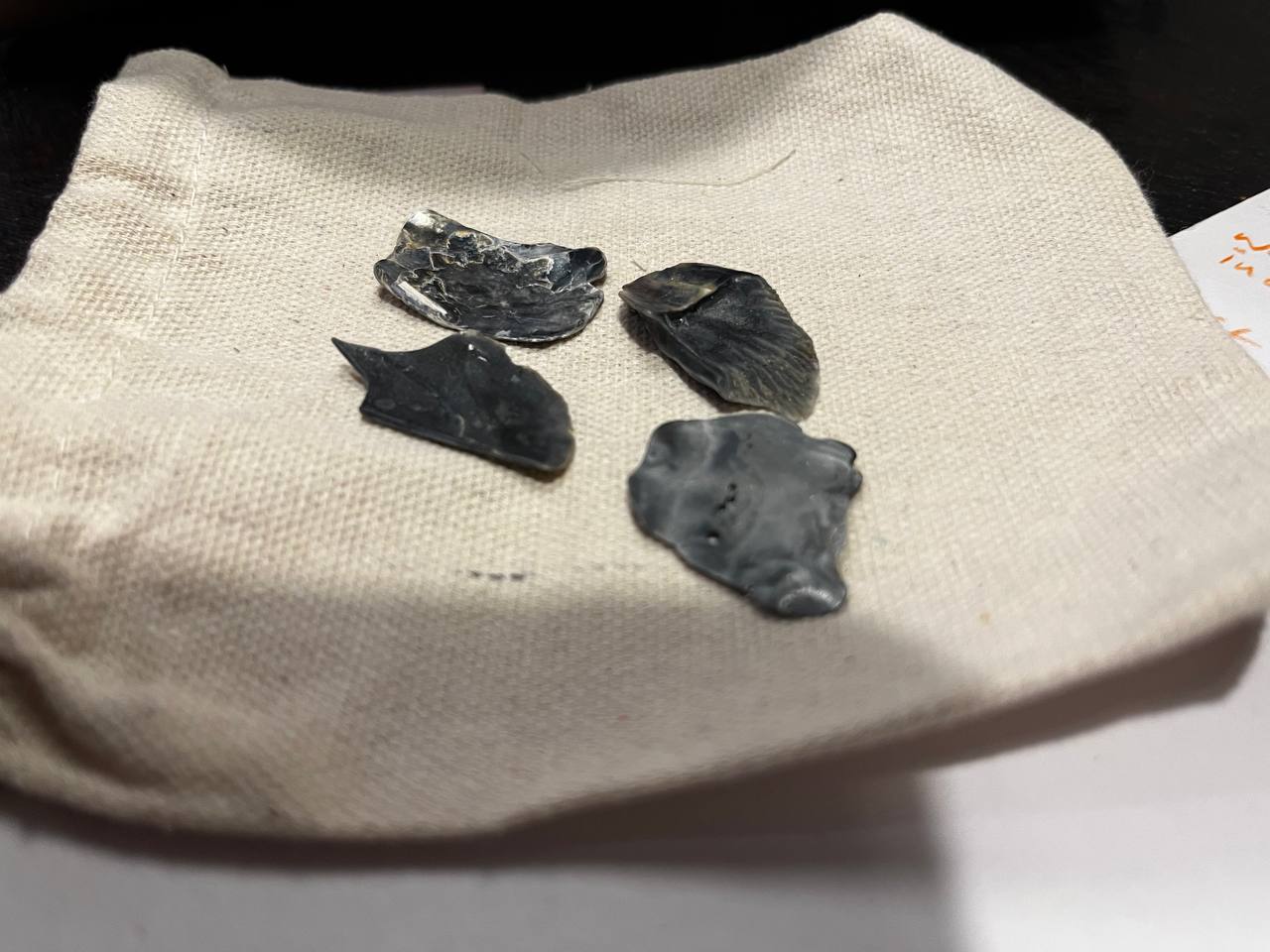
The short answer to your question: calcium — these are shell, and shell is built of calcium carbonate (CaCO₃). So the element doing the structural work is calcium (Ca), bonded with carbon and oxygen (the carbonate, CO₃). The pearly grey sheen on the broken faces is the give-away that these are curved shell fragments (most likely dark mussel pieces), not rock.
Why are they black, then?
The calcium carbonate itself is white. The black comes from other elements added on top:
- Organic periostracum — mussels wear a dark brown-black protein skin over the shell; where it survives, the fragment looks black.
- Iron + sulphur staining — shells buried in oxygen-poor beach/estuary mud get infused with iron sulphide (FeS / pyrite), which stains them grey-black. (This is also how shells slowly start the journey to becoming fossils.)
- Manganese oxides can darken them too.
So: structure = calcium carbonate; colour = a thin overlay of carbon (organic) and iron-sulphur or manganese compounds.
One test to be sure they’re shell and not black rock (chert/basalt): a drop of vinegar will fizz on calcium carbonate (releasing CO₂). Rock won’t. If a piece doesn’t fizz and breaks with glassy sharp edges, that one’s a stone, not a shell — tell me and I’ll re-call it.
Filed under the natural-artifacts collection.